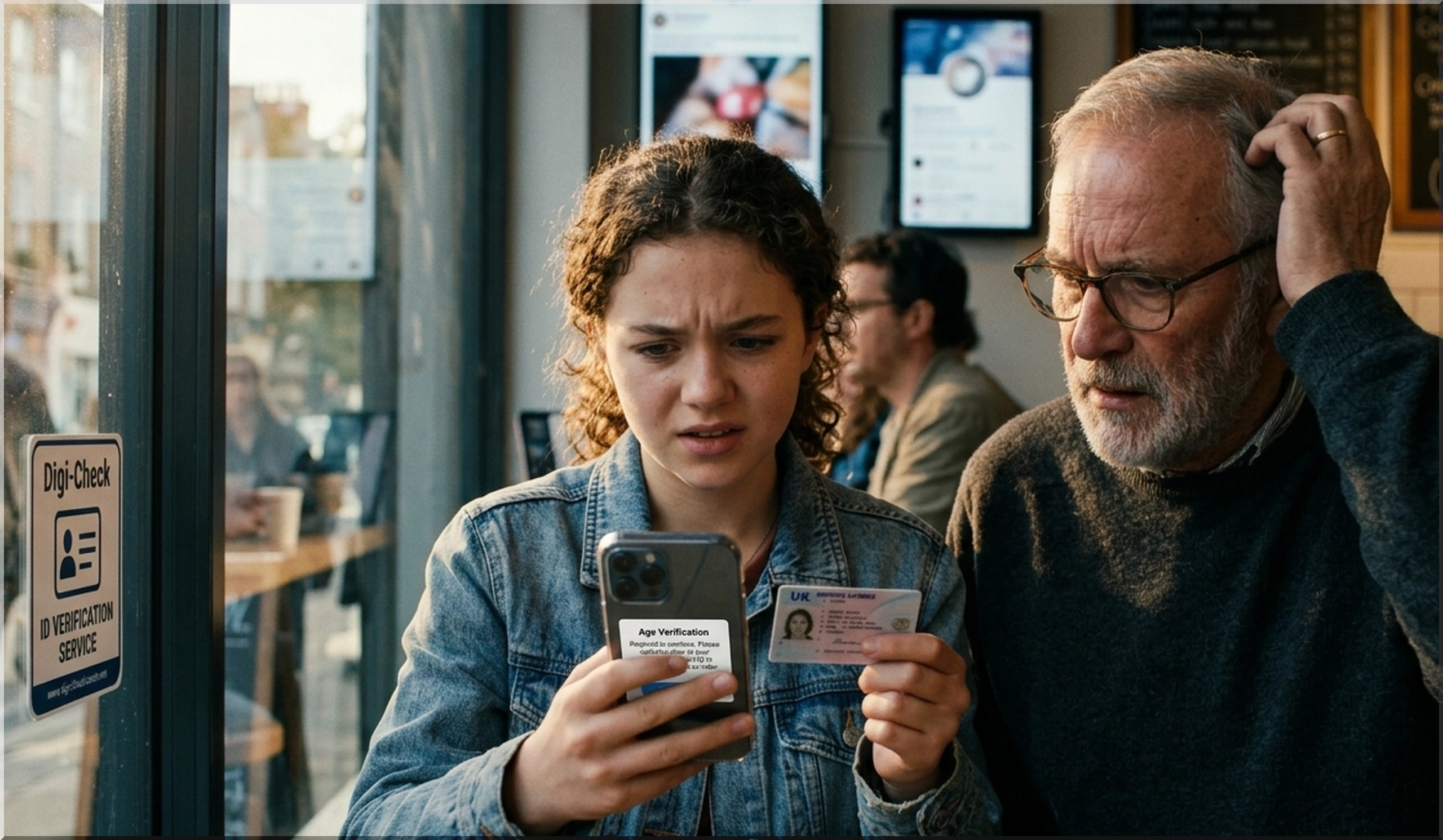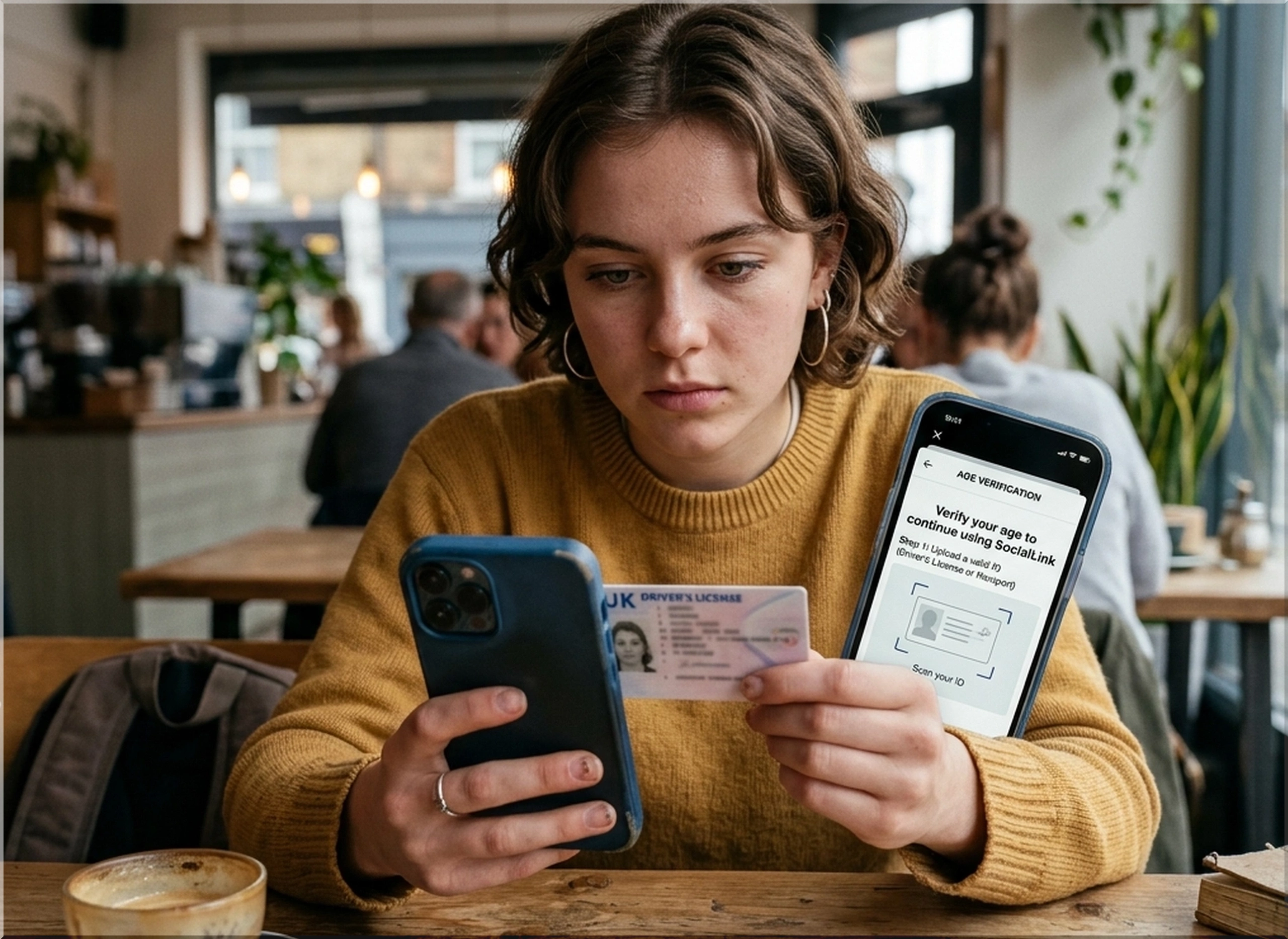


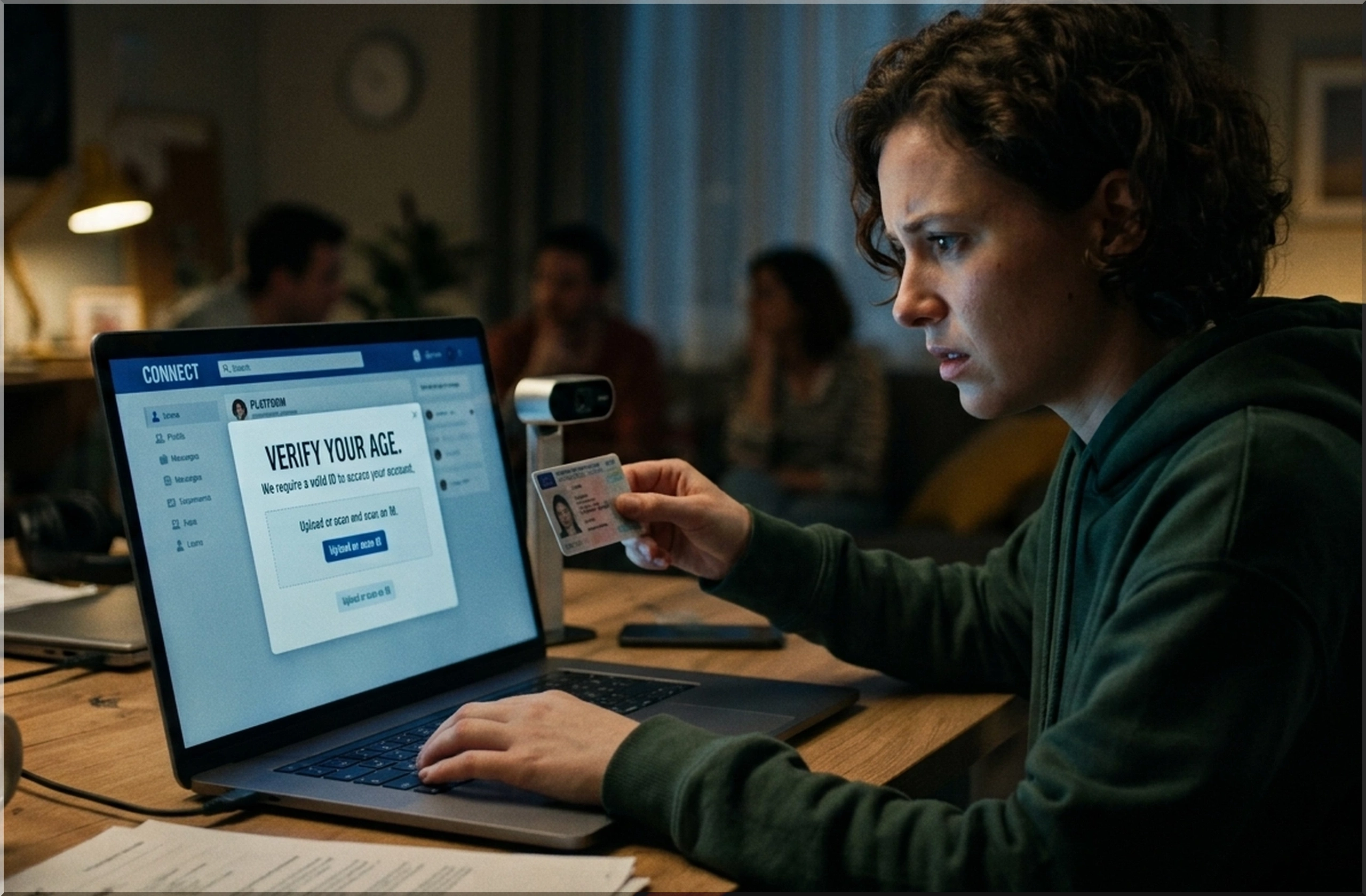
The pitch sounds tidy: keep children away from harmful social media by checking everyone's age. Then reality walks in carrying a passport scanner, a face camera, a database, and several lawyers. Social media age verification may reduce some risks, yet it can also turn ordinary internet access into an identity checkpoint.
Why Age Verification Has Become a Policy Favorite
Parents have good reasons to worry. Social platforms can expose young users to sexual abuse, bullying, violent material, manipulative design, predatory contact, and endless feeds built to hold attention. AI-generated abusive imagery has added fresh urgency. Governments want a visible response, and age limits fit neatly into a press release.
Australia placed an under-16 account ban on major social platforms. European institutions, national governments, and US states have discussed or pursued similar limits.
A 2026 EU survey gathered responses from more than 26,000 people, including teenagers, and found strong concern about child safety on social media.
Still, concern does not turn every technical idea into sound policy. A gate works only when it blocks the right people, protects everyone else's data, and avoids shutting lawful users out. Current systems struggle to meet all three goals at once.
What Social Media Age Verification Actually Means
People often use 'age verification' as one tidy phrase. In practice, providers use several methods with different privacy costs and error rates.
Age Assurance
Age assurance covers any method used to estimate, confirm, or infer a user's age range. It can include a birth date, face scan, identity document, parental approval, account history, payment data, or device settings.
Some checks ask only, 'Are you over 16?' Others connect an age result to a named identity. That difference changes the privacy risk by a mile.
| Method | Data requested | Main benefit | Main risk |
|---|---|---|---|
| Self-declared birth date | Date of birth | Fast and cheap | Easy to fake |
| Behavioral age inference | Account activity | Low friction | Quiet profiling |
| Facial age estimation | Live image or video | No passport required | Errors and biometric exposure |
| Government ID check | Passport, license, or ID card | Strong identity match | Data leaks and lost anonymity |
| Parental approval | Parent consent signal | Gives families control | Excludes some young users |
| Device age signal | Age range linked to an account | Reduces repeated checks | Centralizes tech-company control |
A provider may combine several methods. It might accept a declared age, inspect account behavior, then request a face scan when the account looks suspicious. Regulators call this a layered approach. Users may call it 'Why does an app need my face because I liked a cartoon?'
Image
The Strongest Case for Social Media Age Checks
Age limits can create useful friction. A child who faces a credible check may abandon an account attempt. Platforms may also remove accounts that clearly belong to underage users.
Better age signals could help services apply safer defaults. A verified teen account might receive stricter messaging controls, fewer contact requests from adults, and reduced ad targeting. Parents could gain a cleaner approval method instead of negotiating every app at dinner while pasta cools into wallpaper paste.
Age checks may also force platforms to take age rules seriously. Many services have long relied on birth dates that users type themselves. That system has the security strength of a cardboard lock.
The strongest policy case rests on four claims:
- Platforms already collect signals that can estimate many users' ages.
- Modern face-based tools have improved in accuracy and cost.
- Layered checks can reduce reliance on passports.
- Clear legal duties can push reluctant companies to act.
Those claims carry weight. They still do not settle the privacy, fairness, and free-expression questions.
The Privacy Price Everyone Pays
An age gate aimed at children often checks adults too. A service must decide who falls below the limit, so every user enters the screening pool.
That creates a basic problem: online age verification can require people to share sensitive data before they read, watch, speak, or join a group. The data may include a face image, identity document, payment detail, phone number, or account history.
Even a careful provider can suffer a breach. A careless provider can retain too much. A government can later expand access. A platform can connect the result to advertising data. Put enough low-probability risks in one database and someone eventually has a very bad Tuesday.
The risk grows when third-party vendors conduct the check. Users may know the social network's name but not which verification company receives their image or ID. They may also struggle to learn how long the vendor keeps data or how to appeal a mistake.
Anonymity Has Legitimate Uses
Anonymous and pseudonymous accounts serve ordinary people. Journalists contact sources. Workers discuss unsafe conditions. Abuse survivors seek support. Teenagers ask sensitive questions without inviting a family argument.
Identity-linked access can chill that speech. People speak less freely when they suspect a platform, vendor, or public agency can connect every post to a legal name.
Accuracy Still Has Sharp Edges
Age estimation has improved, but an average error still hurts near a legal cutoff. A system can estimate a 15-year-old as 17 or a 19-year-old as 16. Both errors create real harm.
Facial systems may perform unevenly across skin tones, camera quality, lighting, disability, and device age. On-device processing can protect privacy, yet it may reduce trick detection. Cloud processing may catch more tricks while sending sensitive data elsewhere. Pick your trade-off; none arrives gift-wrapped.
Young users also test rules quickly. They enter false birth dates, borrow adult accounts, use altered images, switch devices, or move to smaller services. Research on Australia's rollout found that teenagers understood access controls, tested weak points, and shared ways around them.
That does not show that every age check fails. It shows that policy depends on implementation, incentives, audits, and penalties. A shiny system with weak enforcement remains a shiny system.
Age Gates Do Not Fix Harmful Platform Design
A child-free account list does not repair the product underneath it. Harmful recommendation systems, aggressive notifications, autoplay, infinite feeds, weak moderation, and adult-to-child contact tools can still hurt teenagers who pass an age threshold.
UNICEF argues that age restrictions alone offer too little protection. The better target sits closer to the source: platform design and business incentives.
Lawmakers can require services to:
- Disable targeted advertising for minors.
- Limit late-night notifications and autoplay.
- Restrict contact from unknown adults.
- Give young users chronological feed options.
- Reduce amplification of self-harm, sexual, and violent material.
- Provide fast reporting tools with human review.
- Set private accounts and location sharing to safer defaults.
- Publish independent audit results on child-risk systems.
These steps address what happens after a young person logs in. That deserves attention because many teenagers will gain access through valid means, parental approval, mistakes, or simple teenage ingenuity.
Can Privacy-Preserving Age Checks Work?
A better system would prove an age threshold without sharing a name, birth date, face image, or document with each website. Cryptographic credentials can move in that direction.
A trusted issuer could check a user's age once, then provide a digital token that says only 'over 16.' The website would receive the answer, not the identity behind it. Single-use tokens could reduce tracking across services.
Zero-knowledge proofs aim to let one party prove a claim without revealing the underlying personal data. In plain English, the system answers the bouncer's question without handing over a passport copy and holiday photos.
The idea offers promise, but design choices decide the result. The issuer might still know which credential belongs to which person. Long-lived identifiers could support tracking. Governments could require logs. Users without identity papers could lose access.
Privacy-friendly technology helps only when law and oversight limit data collection, retention, reuse, and disclosure.
A Seven-Point Test for Any Age Verification Law
Before supporting a proposal, ask seven direct questions:
- Does the law target a proven harm? It should name the risk and explain how age checks reduce it.
- Must every adult submit personal data? A child-safety rule should not build a universal identity register.
- Can the service verify an age range without learning a legal identity? The answer should favor minimal disclosure.
- Who stores the data, and for how long? 'We take privacy seriously' does not count as a retention policy.
- Can an independent auditor test accuracy and bias? Vendors should publish results across ages, skin tones, and device types.
- Can users appeal quickly? A wrong result should not lock an adult out for weeks.
- Does the law also regulate platform design? Access controls alone leave the main engines of harm running.
A proposal that fails several questions needs repair before launch. Good intentions do not encrypt databases.
What Parents and Users Can Do Now
Families do not need to wait for perfect legislation. Parents can review privacy settings, disable location sharing, limit unknown contacts, and discuss how recommendation feeds push emotional content. Calm conversations work better than surprise phone inspections, which often produce two detectives and no trust.
When a service asks for an ID or face scan, users should check who runs the verification, what data the company keeps, and how deletion works. They should also seek a device age signal or token-based check.
Citizens can ask lawmakers for specific safeguards:
- No central database of browsing or posting activity.
- No reuse of age-check data for advertising.
- Strict deletion deadlines.
- Independent security and bias audits.
- Clear appeal rights.
- Strong protection for anonymous speech.
- Platform-design rules that reduce harm at its source.
Protect Children Without Building Permanent ID Checkpoints
Children deserve safer online spaces. Adults and young people also deserve privacy, access to lawful information, and room to speak without attaching a passport to every sentence.
The sensible path combines safer product design, limited age signals, strict data rules, independent testing, and real penalties for platforms that ignore risk. Age verification may play a narrow role. It should never become the internet's default identity desk.
Start with one practical step: read the next age-check proposal past its title. Ask what data it collects, who controls that data, and what happens when the system gets the answer wrong. That small act of scrutiny can separate child protection from surveillance wearing a friendly badge.