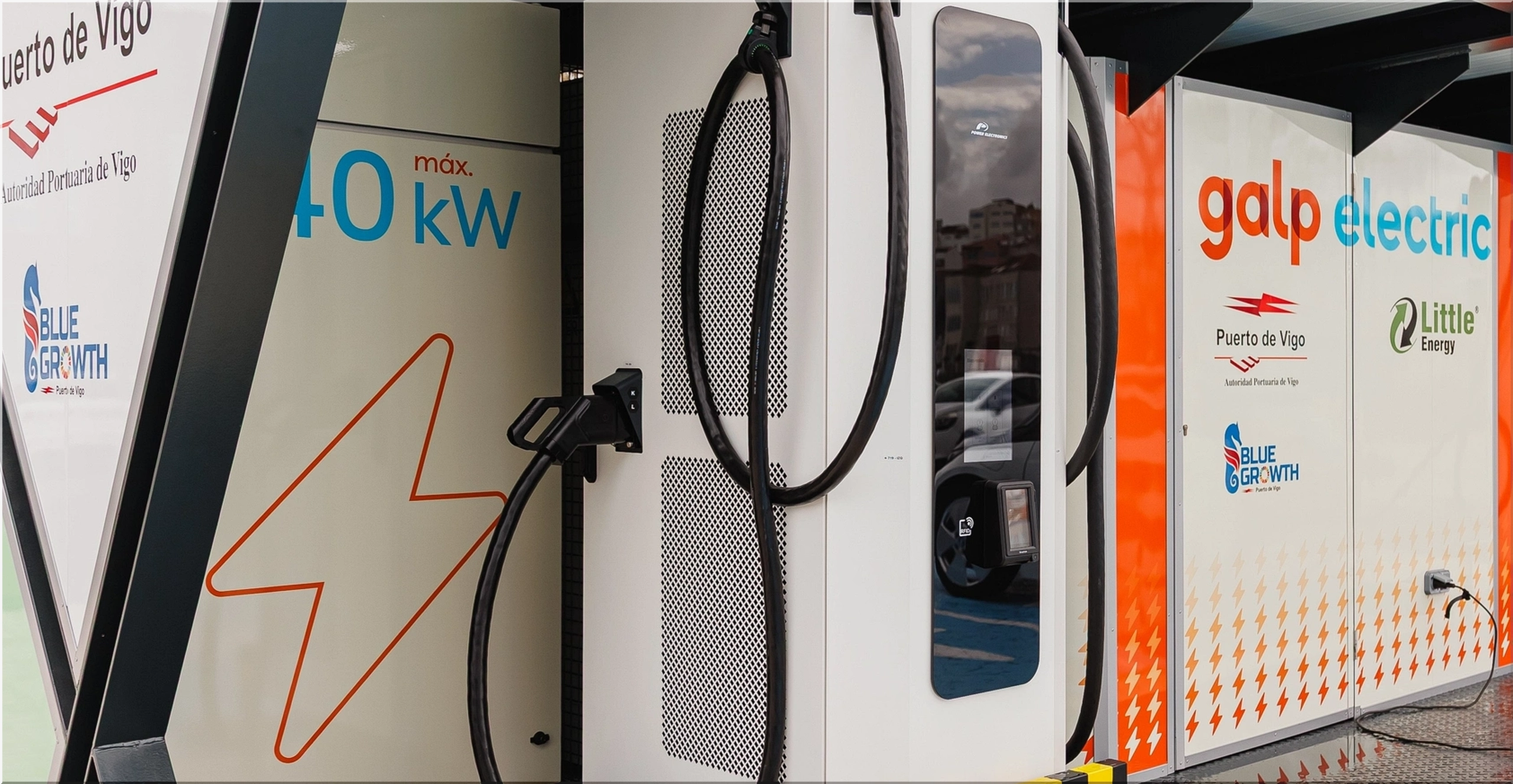

The automotive industry faces a growing challenge: what happens to lithium-ion batteries when they no longer provide the range needed for an electric vehicle (EV)? Nissan just provided a functional answer at the Port of Vigo in Spain. By pulling 12 used Nissan LEAF battery packs out of cars and putting them into a stationary Energy Storage System (ESS), the company created a high-output charging station in an area where the local power grid normally fails to meet demand.
Technical Specifications: The Green Charge Flex System
The project, branded as Green Charge Flex, comes from a partnership between Nissan and Little Electric Energy, a Spanish specialist in energy storage. The hardware consists of 12 repurposed 30kWh battery packs. When combined, these units create a 300kWh Energy Storage System.
This setup solves a specific engineering problem. High-speed chargers require massive draws of electricity that local infrastructure often cannot provide without expensive upgrades. The Nissan Green Charge Flex acts as a buffer. It slowly pulls power from the grid to fill the 300kWh reservoir and then discharges it rapidly when a vehicle plugs in.
This modular, plug-and-play solution supports ultra-fast DC charging at speeds up to 240kW. For context, a standard grid connection in a constrained industrial area might only support a fraction of that speed. The system also offers 22kW AC charging for vehicles that stay parked for longer durations.
Strategic Location: Why the Port of Vigo Matters
Nissan selected the Port of Vigo because it represents a grid-constrained area where traditional infrastructure investments would take years to complete. Industrial ports require constant power for lighting, machinery, and ships. Adding high-speed EV charging hubs to this mix often triggers a grid overload.
The pilot program will run for at least one year. During this time, the system will power four electric vehicle charging hubs at the port. By using the second-life batteries as a middleman, Nissan avoids putting immediate stress on the Spanish electrical grid. The system supports multiple hardware standards, including CCS-1, CCS-2, and CHAdeMO, making it compatible with almost every electric vehicle on the market.
The Economic Reality of Second-Life Batteries
Repurposing batteries makes financial sense. A battery pack that has lost 20% of its original capacity is no longer ideal for a car, where weight and range are the primary metrics. However, for stationary storage at a port, the weight of the battery does not matter. The lithium-ion cells still hold significant value and can function in this secondary role for years.
This project received financial backing from the European Union and the Institute for the Diversification and Saving of Energy (IDAE), Spain's national energy agency. While the official budget figures remain internal, industrial energy storage systems of this scale typically represent significant infrastructure savings compared to digging up and replacing miles of high-voltage cable.
Market Comparison: Stationary Storage Solutions
To understand where the Nissan and Little Electric Energy project sits in the market, look at how it compares to other battery energy storage units used for EV infrastructure.
| System Name | Manufacturer | Capacity (kWh) | Peak Output (kW) | Battery Source |
|---|---|---|---|---|
| Green Charge Flex | Little Electric Energy / Nissan | 300 kWh | 240 kW | Repurposed LEAF Packs |
| Audi Charging Hub | Audi | 2,450 kWh | 320 kW (per stall) | Second-life e-tron Packs |
| Mobile Power Bank | Volkswagen | 360 kWh | 100 kW | New/Used ID. Series Packs |
| Tesla Megapack | Tesla | 3,900 kWh | 1,900 kW | New Battery Cells |
The Green Charge Flex focuses on modularity. While systems like the Audi Charging Hub offer much higher capacity, they occupy a significantly larger footprint. The Nissan-backed solution aims for industrial sites and ports where a "plug-and-play" installation is more valuable than massive scale.
Circular Economy and Nissan Ambition 2030
This Spanish pilot is a direct result of Nissan Ambition 2030, the company's long-term plan to achieve carbon neutrality. The goal is to eliminate waste across the entire life cycle of the product. Nissan refers to this as a circular life for batteries.
The AMIEO region (Africa, Middle East, India, Europe, and Oceania) is the primary testing ground for these technologies. By turning electric vehicle batteries into a grid-balancing tool, the company extends the functional life of the hardware. This reduces the need for new raw material extraction and lowers the total carbon footprint of each Nissan LEAF produced.
Operational Advantages for Fleet Managers
For a Charging Point Operator (CPO), the Green Charge Flex offers several operational wins:
- Reduced Demand Charges: Power companies often charge extra for sudden spikes in electricity use. The ESS smooths out these spikes, potentially saving thousands of dollars in monthly utility bills.
- Rapid Deployment: Because the system is modular, it does not require the same level of permitting or construction as a permanent grid substation.
- Sustainability Metrics: Companies operating at the Port of Vigo can report lower indirect emissions by using repurposed battery technology.
The lithium-ion batteries used in this project are the 30kWh versions found in older LEAF models. These units have proven to be durable enough for stationary use, and their modular nature allows technicians to swap out individual packs if performance drops, rather than replacing the entire 300kWh system.
The Future of Grid-Flexible Charging
The success of the Port of Vigo pilot will likely determine how quickly Nissan rolls this technology out to other grid-constrained areas. If the system maintains its 240kW output reliably over the next 12 months, it proves that second-life batteries are a viable commercial product, not just a science experiment.
As more electric vehicles hit the used market, the supply of these battery packs will increase. Turning these packs into EV charging infrastructure creates a self-sustaining loop. The cars of yesterday are literally providing the power for the cars of tomorrow.