
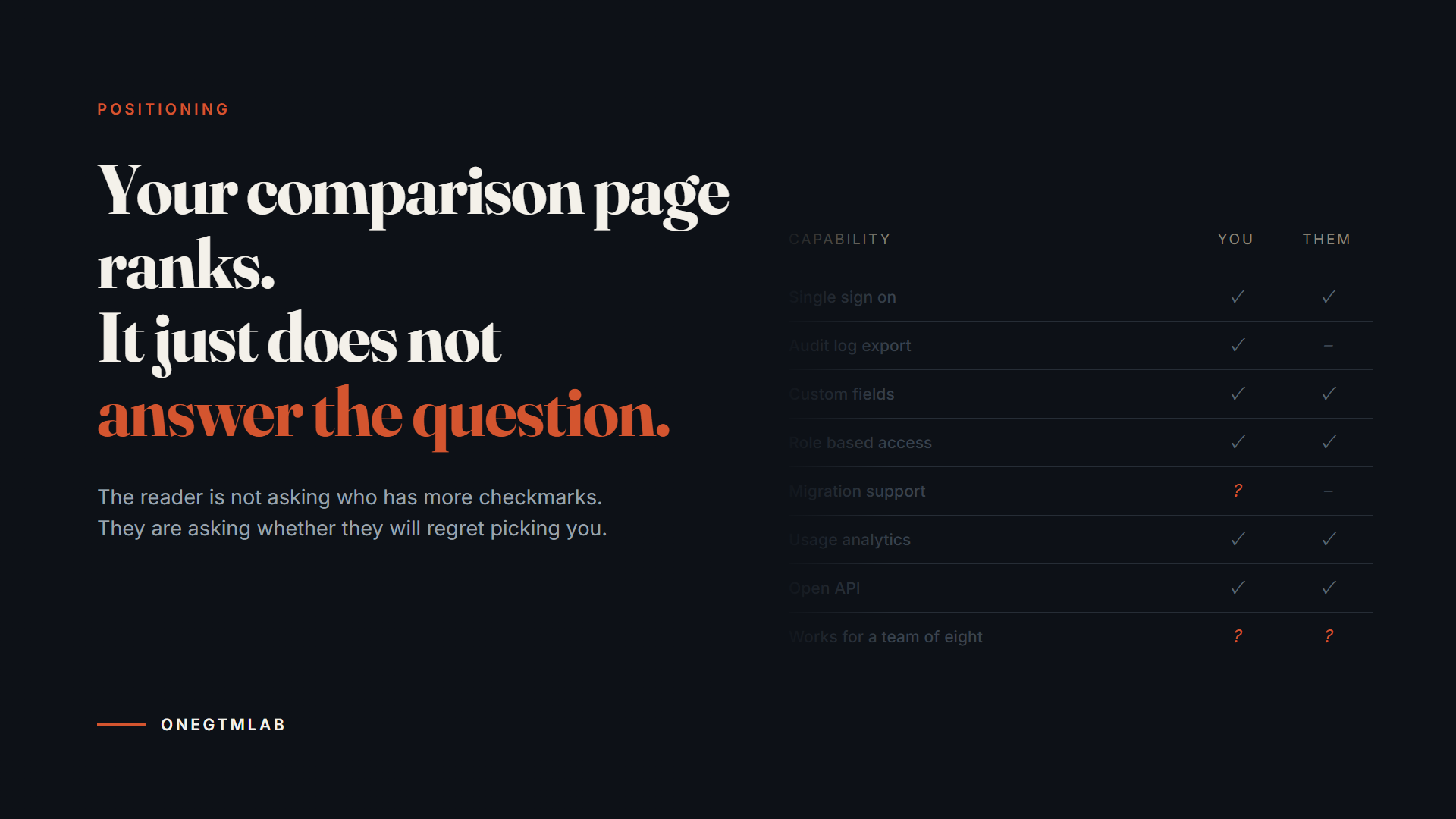
Most B2B SaaS teams eventually build a page called "us versus them". It ranks. People read it. Then almost nobody books anything. The team concludes that comparison traffic is low intent and moves on.
That conclusion is usually wrong. The traffic is fine. The page is answering a question the reader did not ask.
The reader is asking a narrower question than you think
Someone searching your name next to a competitor's name has already decided they need this category of product. They are not asking which tool is better in general. They are asking a much narrower question: given my situation, will I regret picking this one. A feature table cannot answer that, because the reader cannot see themselves anywhere in it.
Here is the shape of the problem. A comparison page built from a feature grid says that you have fourteen checkmarks and the other side has eleven. The reader does not know which three they will actually miss. They do not know whether the missing three matter for a team of eight or only for a team of eighty. So they leave and go ask someone in a community instead, because a person will tell them the thing the page will not.
Organise the page around situations, not features
Name the cases where the other tool is the right answer and say so plainly. A page that admits a competitor wins on a specific use case earns the right to be believed on the ones where it does not. Readers are already assuming your page is biased. Removing that assumption is worth more than another checkmark.
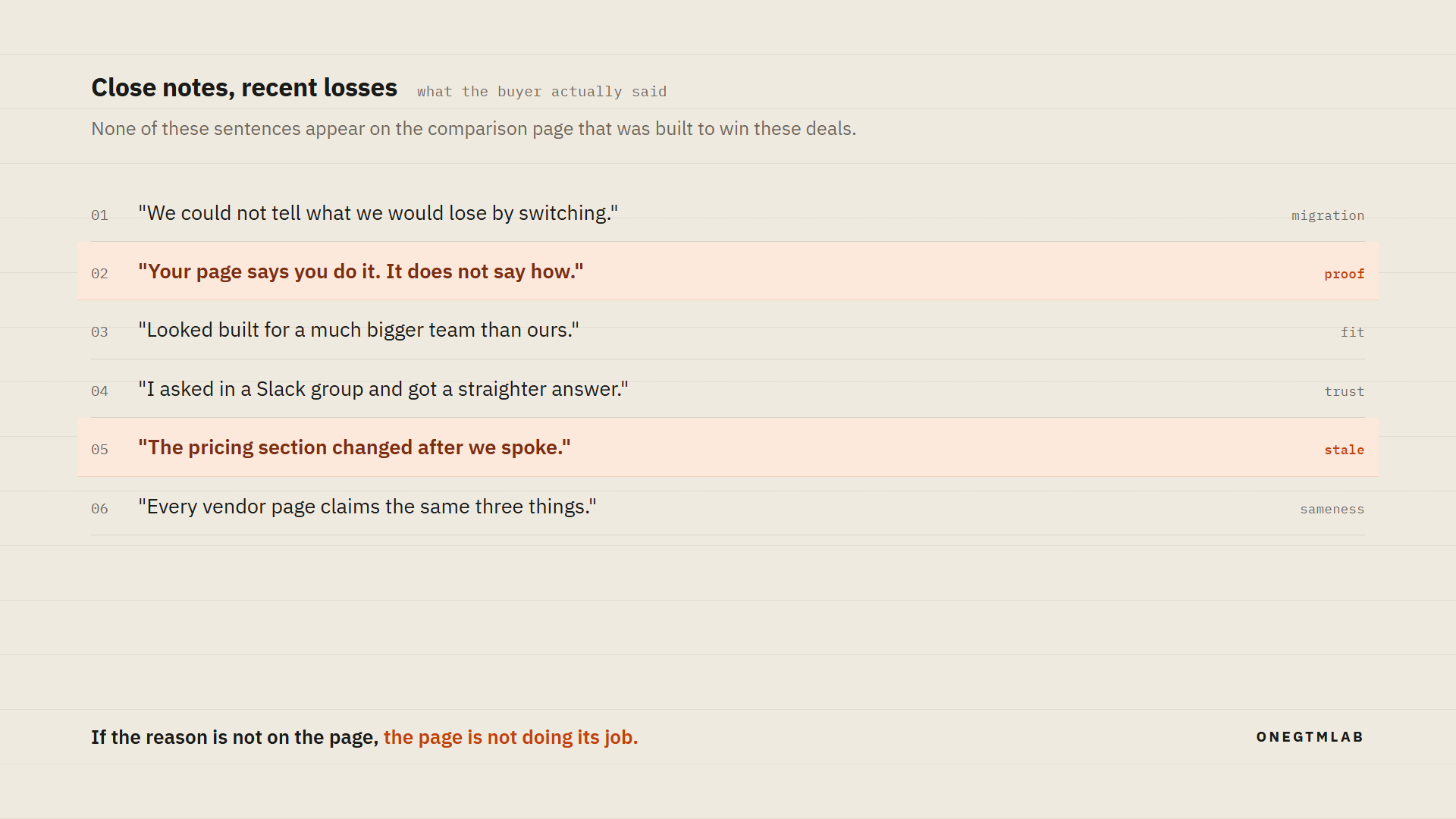
Then take the three or four objections that actually come up in your sales calls and answer them in the reader's words, not in yours. If people keep saying that migration looks painful, the page needs to say what migration involves, how long it took the last few customers, and what breaks. Vague reassurance reads as evasion.
A page written once is confidently wrong
The second thing that kills these pages is timing. Many of them are written at launch and then left alone while the competitor changes pricing, ships the missing feature, or repositions entirely. A comparison page that is eighteen months old is not neutral. It is confidently wrong, and a reader who notices one stale claim will discount the whole page.
How to find out which one is happening on your page
Pull the last ten deals you lost to the competitor you wrote about. Read the close notes. If the reasons people actually gave you do not appear anywhere on the page, the page is not doing the job it was built for. That gap is almost always the real issue, and it is fixable in an afternoon.
None of this requires more traffic. It requires the page to say the thing your reader is already worried about, before they have to ask someone else.
We work on positioning and competitive messaging for B2B SaaS teams at ONEGTMLAB, usually starting from closed deals rather than from a feature list. Examples of that work are in our case studies.