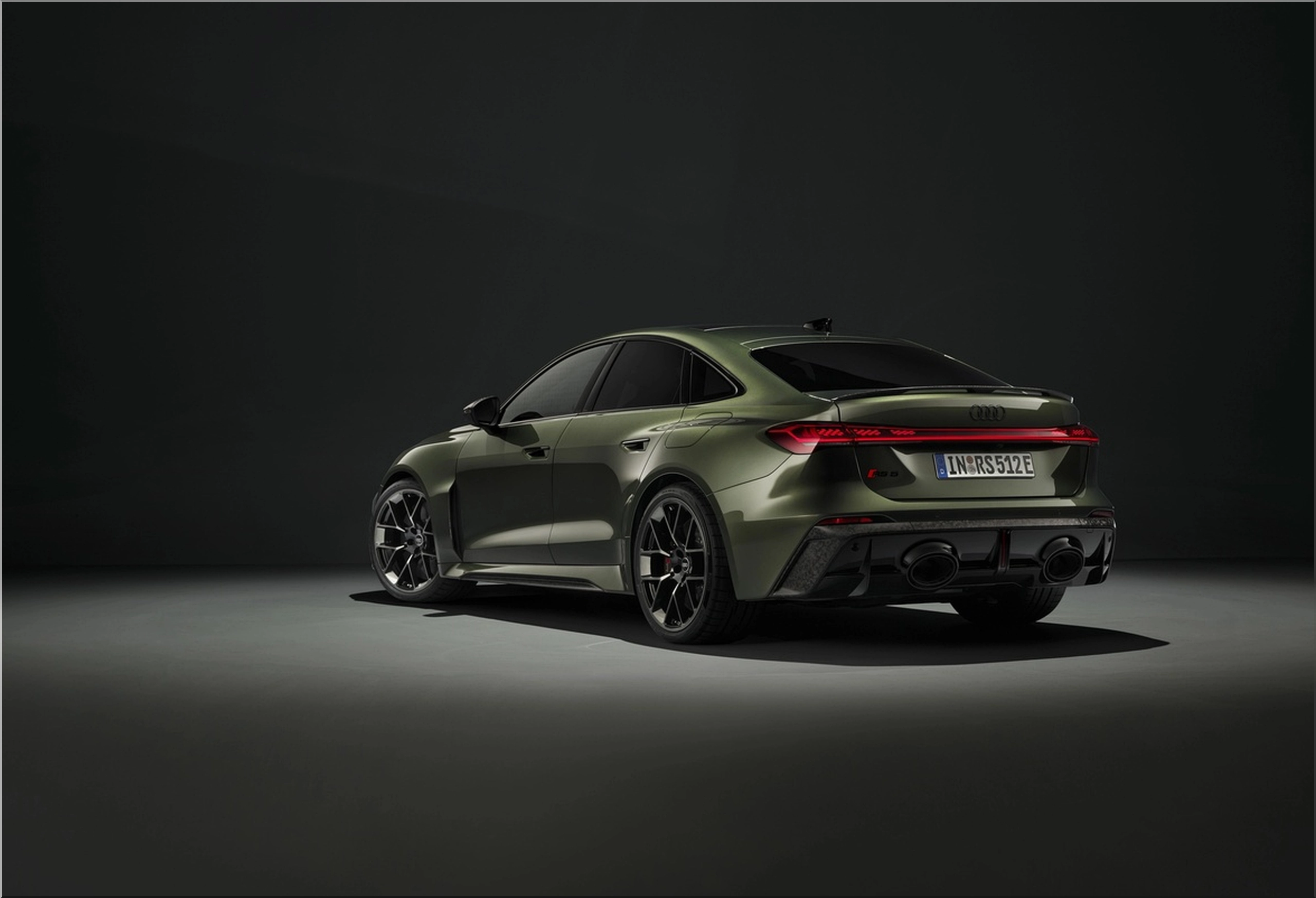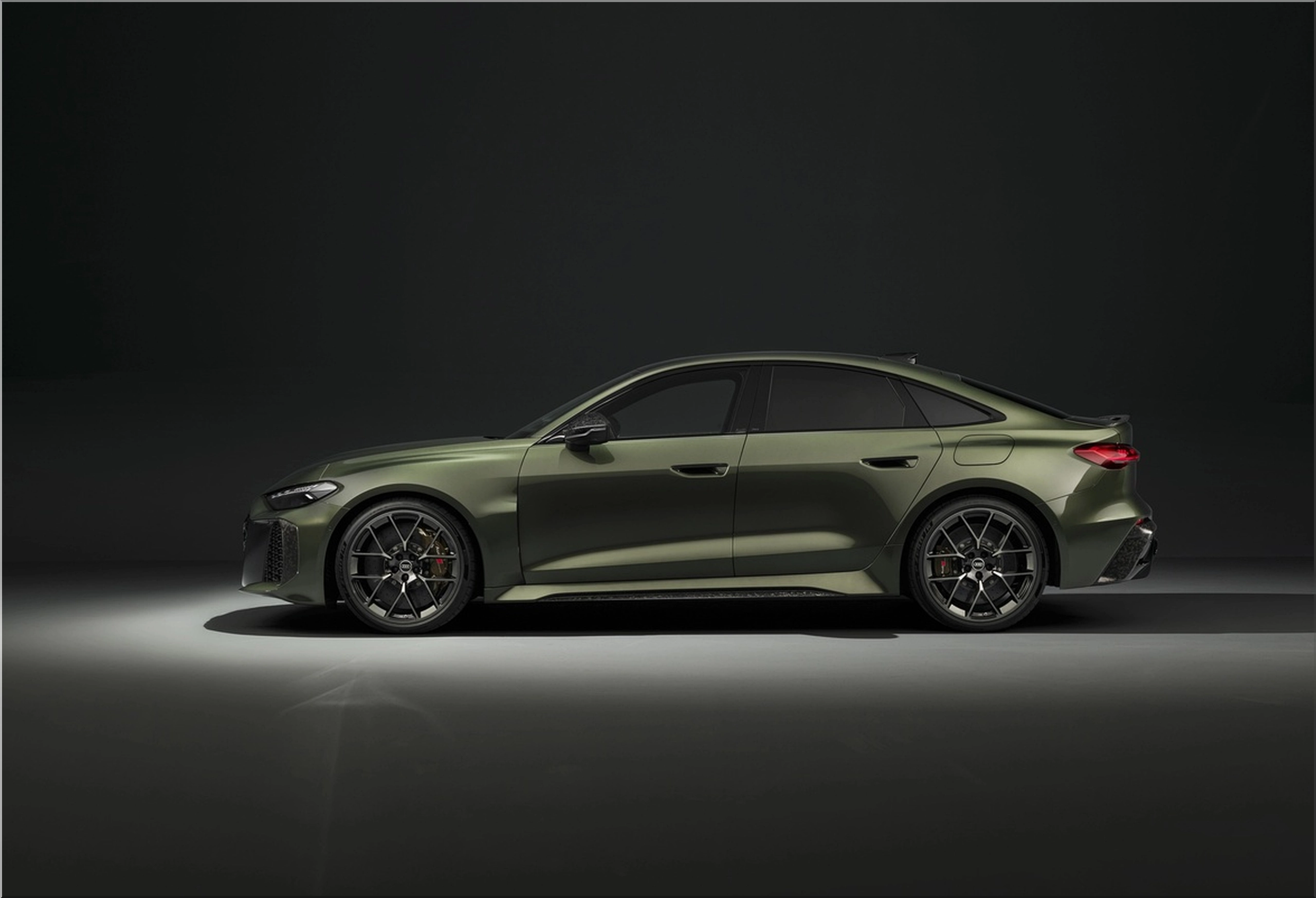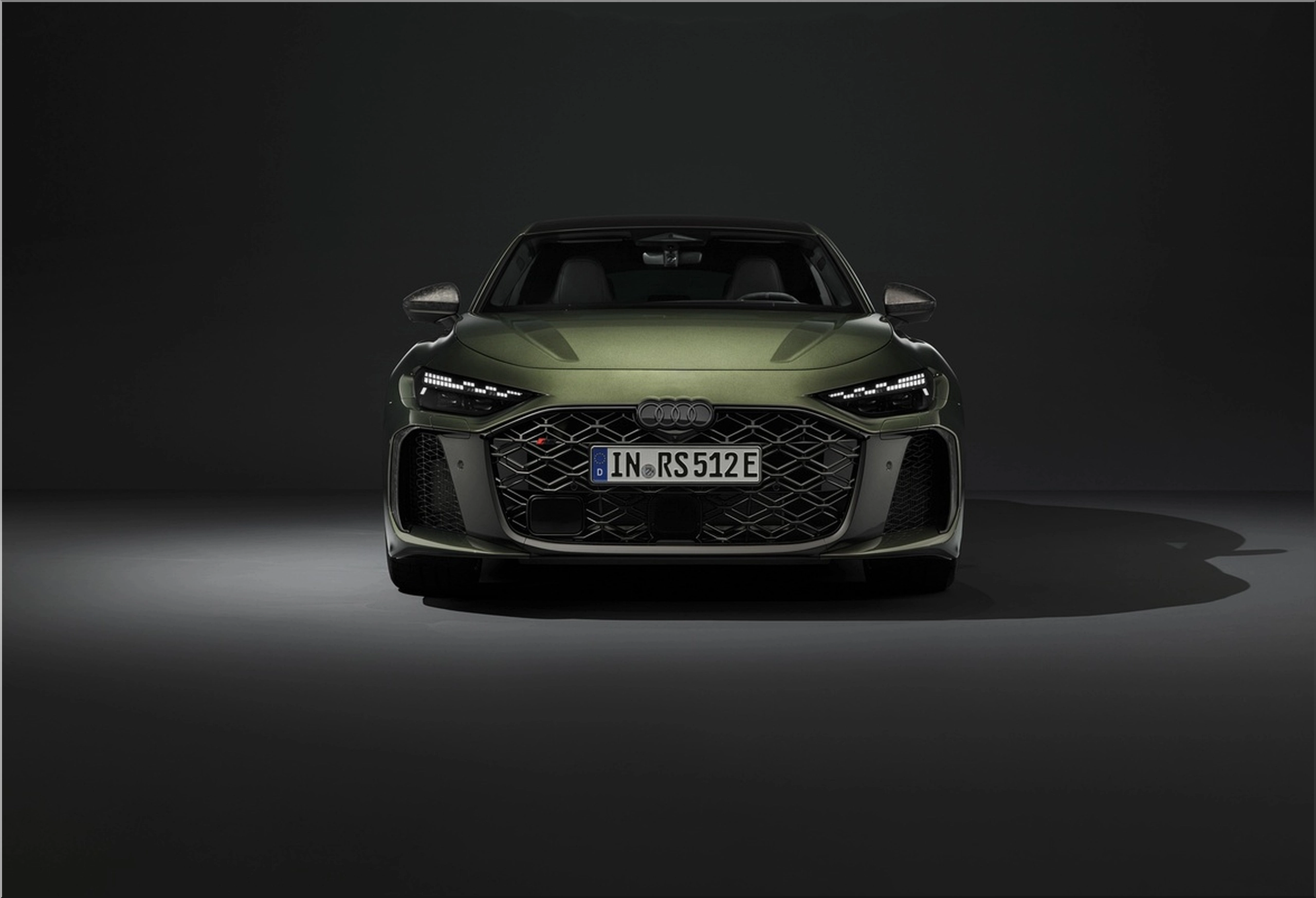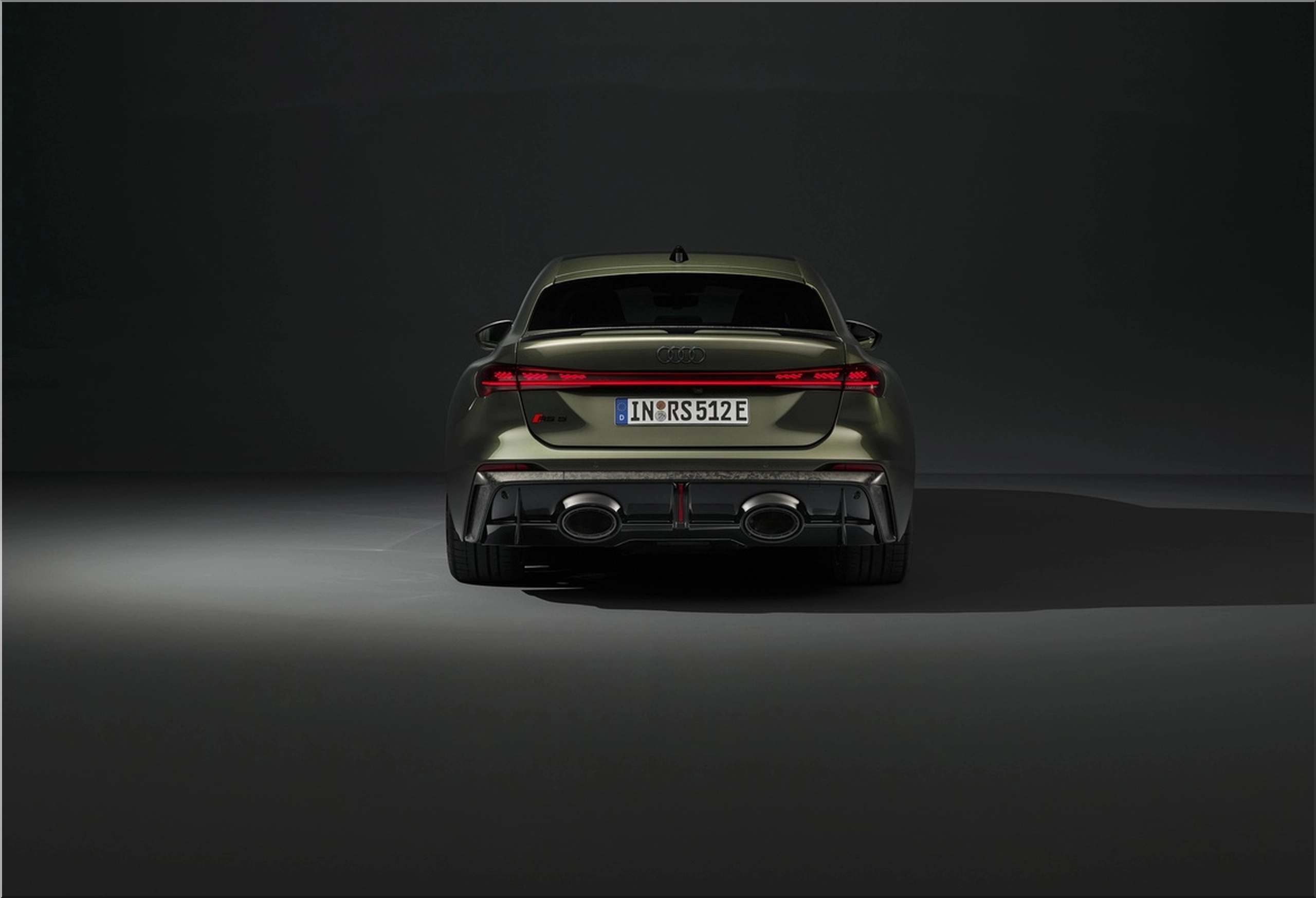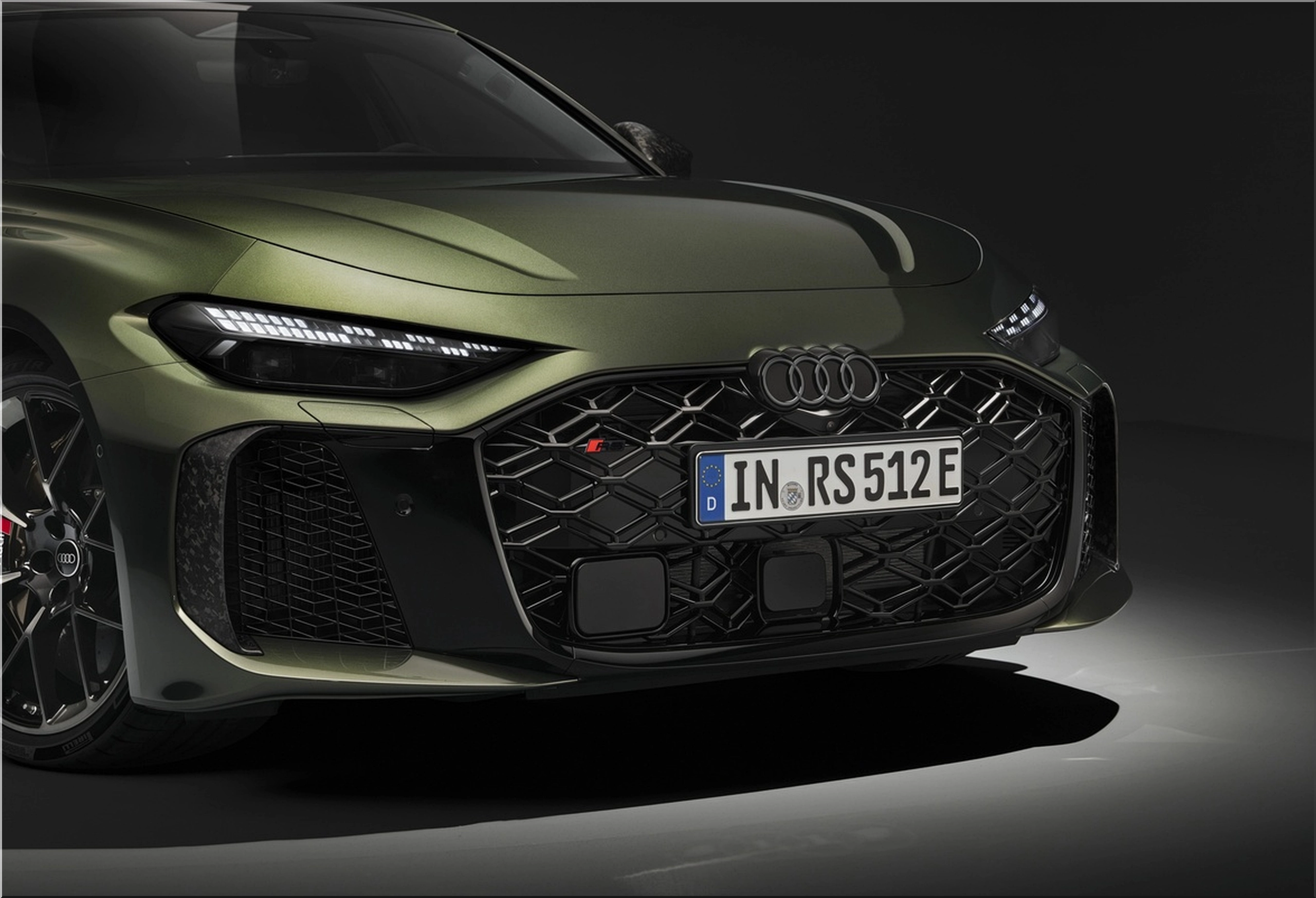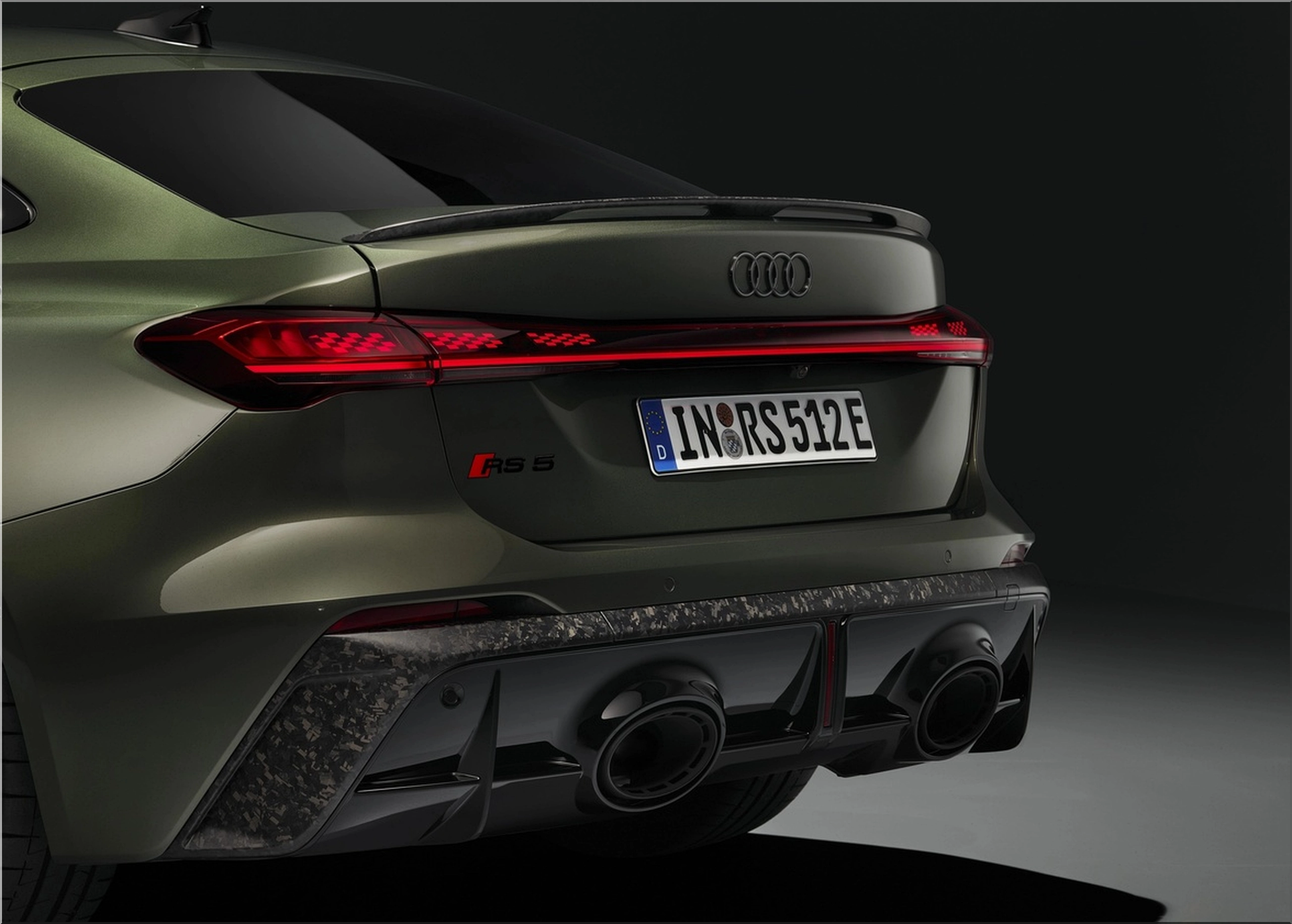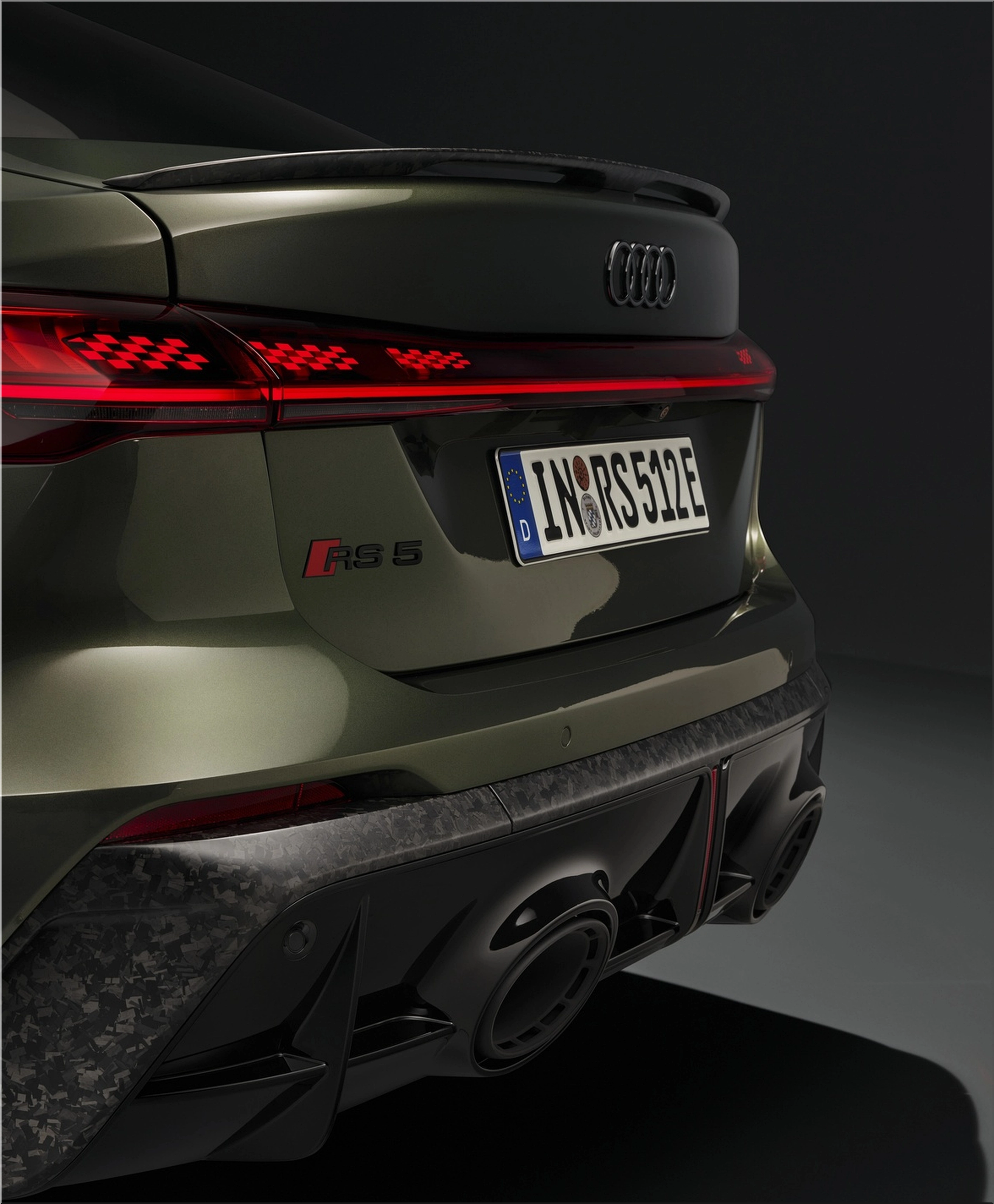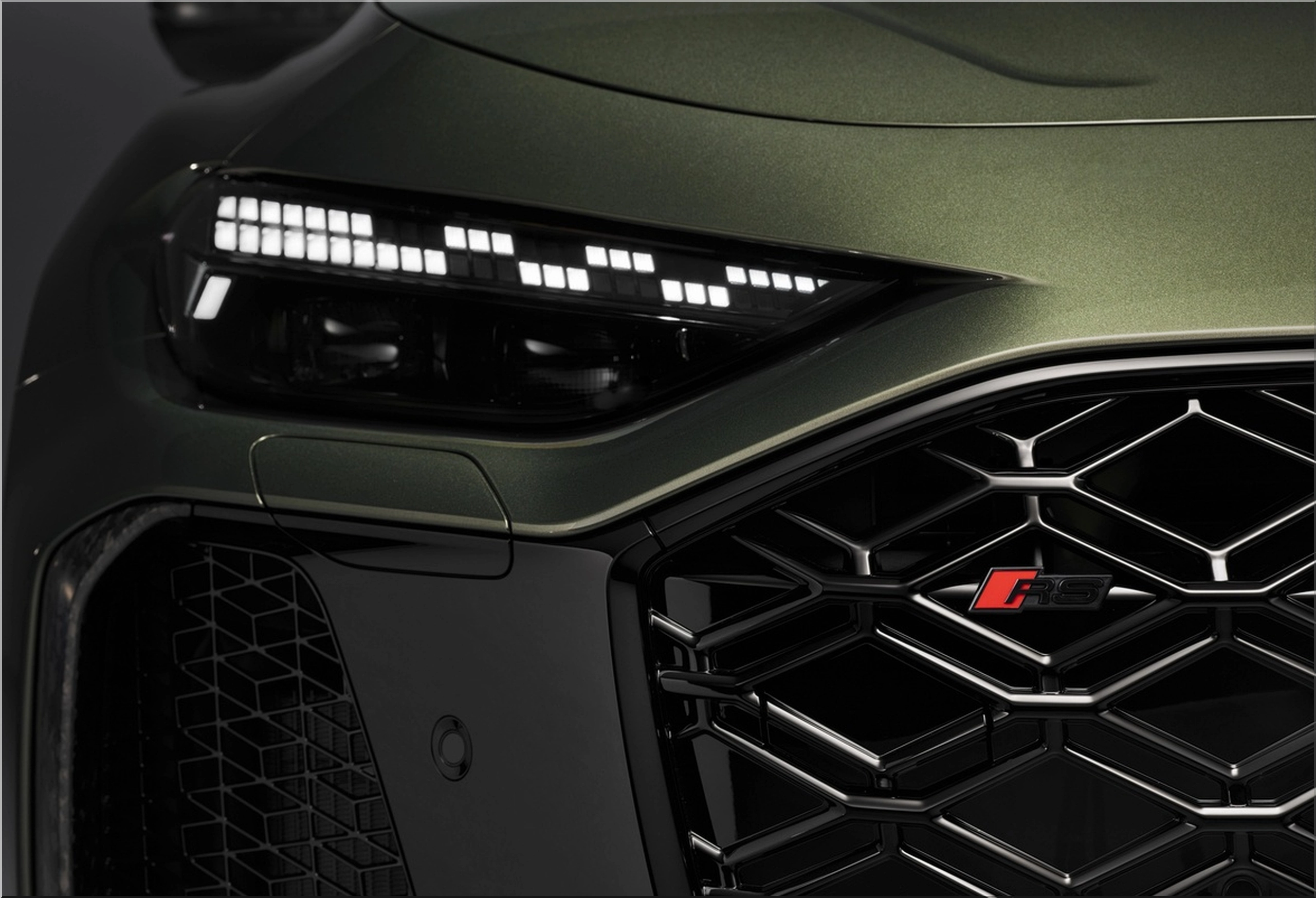

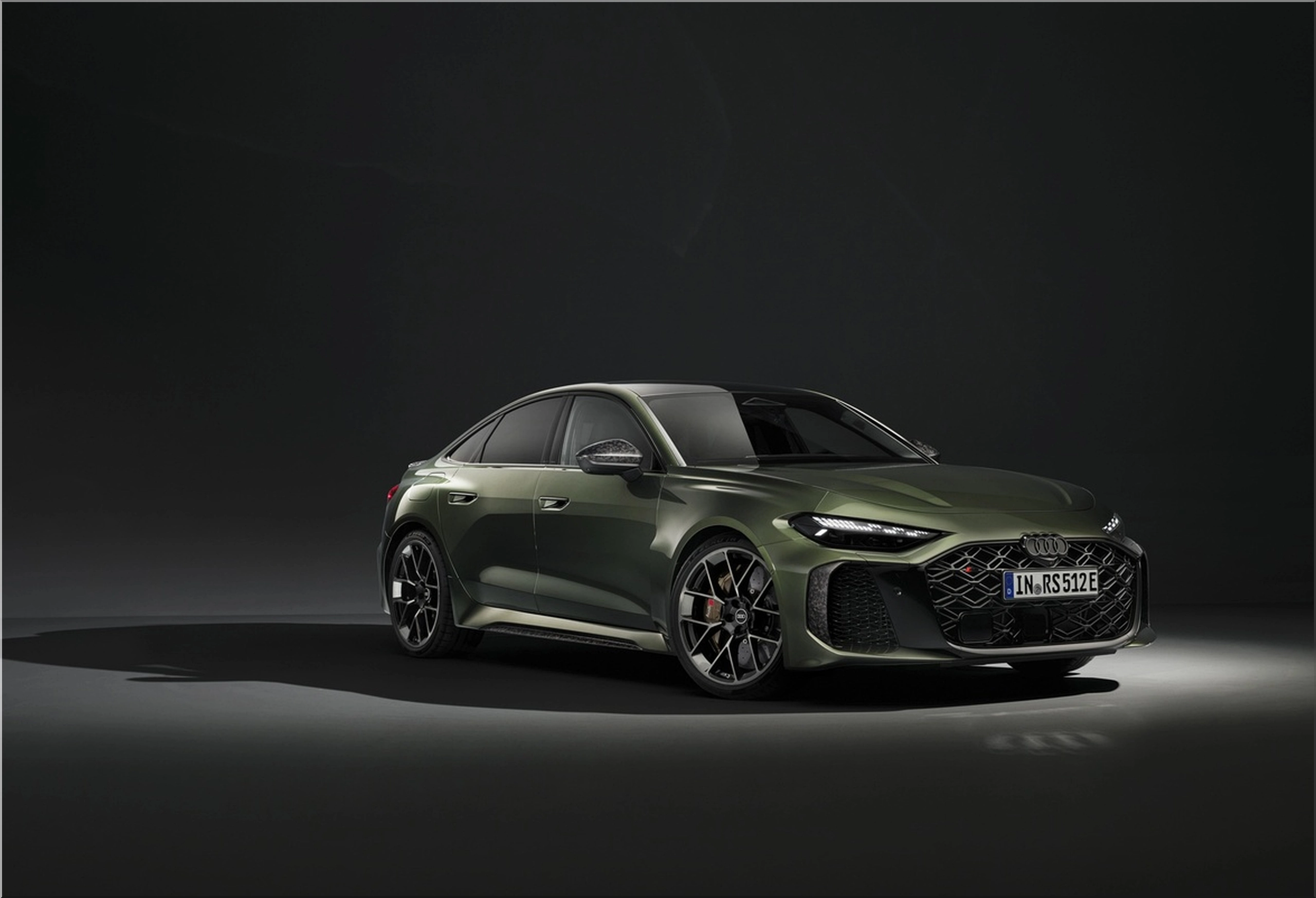
The new Audi RS 5 Sedan arrives as a plug-in hybrid with a claimed 470 kW (639 PS) system output, 825 Nm of system torque, a 2.9-liter twin-turbo V6, and an integrated 130 kW electric motor. Audi also pairs that powertrain with an all-new rear transaxle and a production-first electromechanical rear torque-vectoring setup under the brand's new quattro with Dynamic Torque Control system.
That reads like a powertrain change. In practice, it is a full platform-level rethink.
Audi also added a major U.S. caveat right up front: the release currently reflects a global launch, and final U.S.-market specifications, pricing, and EPA numbers will arrive later. Some lighting functions named in the global release will also not reach the U.S. due to regulations. That matters if you are shopping this car based on headline numbers alone.
What the New Audi RS 5 Sedan Changes
Audi did not simply add a battery and call it progress.
The new 2027 Audi RS 5 Sedan combines a revised V6 with a high-voltage hybrid system, new drivetrain architecture, brake-by-wire blending, fresh rear-axle hardware, and software-heavy chassis control. That combination changes how the car deploys power, how it rotates at corner entry and exit, and how it holds repeatable performance under load.
Core headline numbers at a glance
- System output: 470 kW (639 PS)
- System torque: 825 Nm (about 608.5 lb-ft)
- Engine: 2.9L twin-turbo V6 TFSI
- Engine output: 375 kW (510 PS) (about 503 hp)
- Engine torque: 600 Nm (about 443 lb-ft)
- Electric motor output: 130 kW (177 PS) (about 174 hp)
- Electric motor torque: 460 Nm (about 339 lb-ft)
- Battery capacity: 25.9 kWh gross (22 kWh net)
- 0-100 km/h: 3.6 seconds (about 0-62 mph)
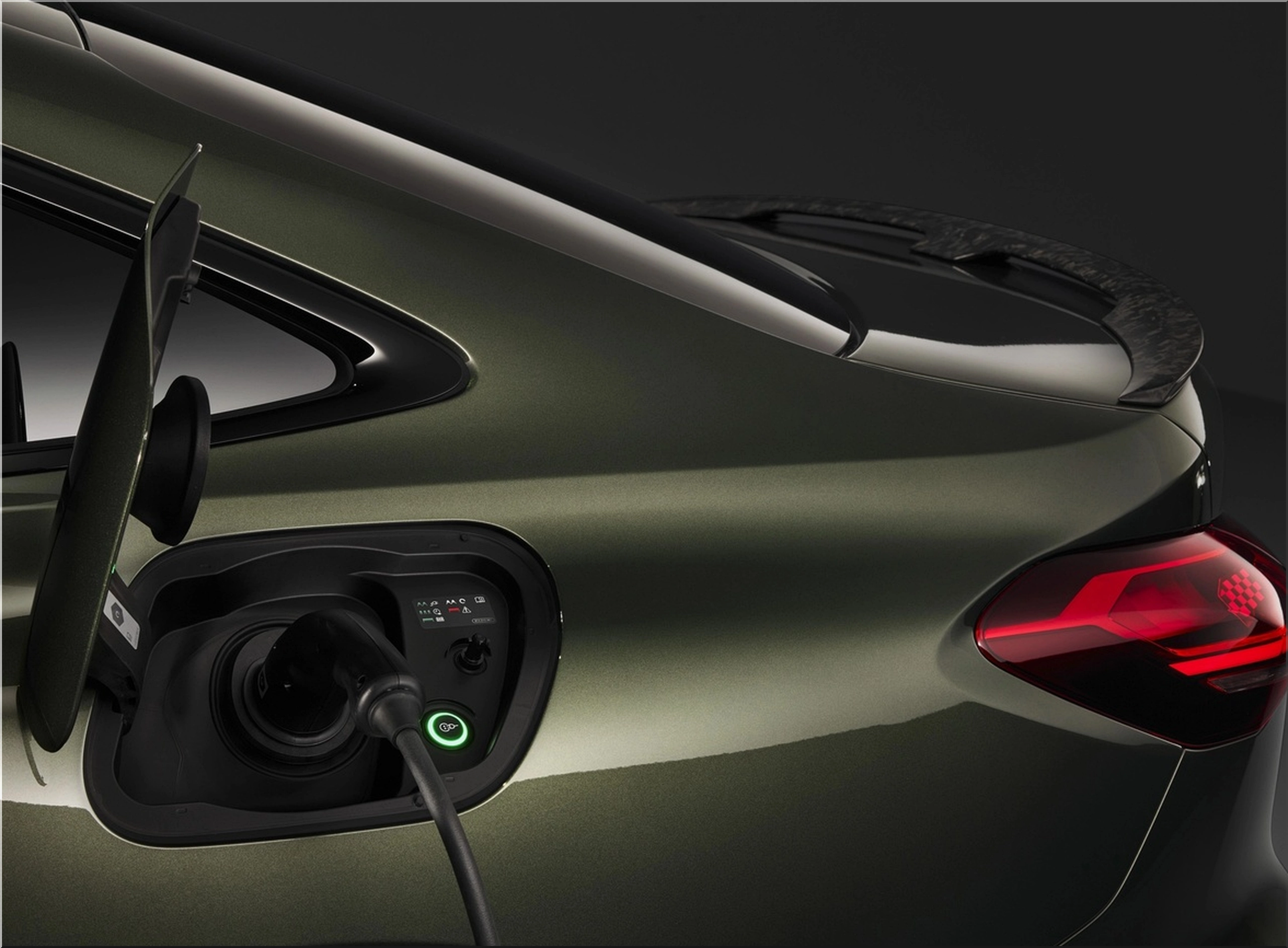
- AC charging: up to 11 kW
- Charge time (0-100%): about 2.5 hours
- Claimed electric range (EAER): up to 84 km, up to 87 km city (about 52 miles, up to 54 miles city)
- Optional top speed (Audi Sport package): 285 km/h (about 177 mph)
Looking at the data, Audi aims at two targets at once: straight-line output and repeatable corner-exit traction. The hybrid system adds big peak numbers, but the engineering story sits in the way Audi uses electric power for torque distribution and response.
Powertrain Engineering: Why This Hybrid RS 5 Feels Like an RS 5
Audi calls this its first high-performance RS plug-in hybrid. The phrase matters because it signals intent: this system does not chase EV range first and performance second.
It chases response, rear-axle control, and repeatability.
The revised 2.9-liter twin-turbo V6
The combustion side of the RS 5 PHEV starts with an upgraded 2.9L V6 TFSI rated at 375 kW (510 PS). Audi says that represents a significant gain over the prior RS 5 generation, and it credits that gain to continuous development focused on performance.
Audi also points to a modified Miller cycle for partial-load efficiency. That gives the engine a wider operating window where it can run with lower fuel demand when the car does not need full output. The hybrid system then fills response and torque delivery gaps.
Specifically, Audi also revised the intake and boost path:
- Variable-geometry turbochargers
- Optimized high-pressure piping for lower losses
- Higher fuel injection pressure
- Water-to-air intercoolers for improved thermal control under load
- A shorter, less restrictive intake path
From an expert perspective, that package addresses three common problems in heavy performance hybrids: heat soak, delayed transient response, and inconsistent repeatability after multiple hard pulls. Audi's choices point directly at those weaknesses.
The 130 kW electric motor and what it actually does
Audi integrates the 130 kW electric motor into the hybridized 8-speed tiptronic. On paper, the motor adds 177 PS and 460 Nm. In practice, it also improves launch response, fills torque during gear changes and turbo spool, and supports the rear torque-vectoring system via the high-voltage architecture.
Audi also says the electric motor starts the engine, so the car deletes a conventional 12-volt starter motor. That trims one component while improving restart behavior.
The motor uses an external-rotor design, with the stator inside the moving rotor. Audi says that wider interaction area improves torque density, cooling, and efficiency. That makes sense in a performance PHEV where packaging and thermal stability matter more than brochure novelty.
Battery, charging, and thermal strategy
The battery sits under the trunk floor and stores 25.9 kWh gross / 22 kWh net. Audi states that improved cell chemistry maintains stronger power output at low state of charge and in extreme temperatures versus the prior generation.
That detail matters more than range here.
A performance hybrid can post huge power for one run, then drop off if the battery overheats or depletes too far. Audi addresses that with aggressive charge-retention logic and active thermal management:
- In RS sport and RS torque rear, the car holds battery state of charge near 90%
- In dynamic mode, the car keeps charge from dropping below 20%
- Active cooling targets about 20 degrees C in harder RS modes
- The battery also feeds the torque-vectoring actuator motor (up to 8 kW supply to that unit)
Consequently, the new Audi RS 5 Sedan uses the battery as a performance buffer, not only as an efficiency device.
Quattro with Dynamic Torque Control: The Real Story of the New RS 5
This section defines the car.
Audi describes the system as a world-first production setup: quattro with Dynamic Torque Control, combining a preloaded center differential and a new electromechanical rear torque-vectoring transaxle. Audi also states the central controller computes rear torque targets at 200 Hz (every 5 milliseconds), and the rear unit can deploy torque differences in 15 milliseconds.
That timing matters. Fast control loops produce a car that reacts before the driver feels the chassis fall behind.
How the new center differential changes turn-in
Audi says the new center differential uses preload so it stays partially locked even with no applied torque. That means the front and rear axles stay coupled during off-throttle moments, like turn-in and weight transfer.
Why that helps:
- The car reacts faster when the driver transitions from brake to throttle
- The chassis cuts internal understeer at corner entry
- Steering response sharpens when the driver lifts and rotates the car
- Torque reaches the wheels faster after rapid on/off throttle transitions
This sounds subtle in print. It feels big on road or track because many AWD performance cars go soft and vague during those transitions.
Electromechanical rear torque vectoring in the transaxle
Audi's rear transaxle uses:
- A water-cooled permanent-magnet electric motor (8 kW / 40 Nm actuator)
- Overdrive gears
- A differential with low lock percentage
- Centralized vehicle dynamics software (HCP1 controller)
Audi says the system can create up to 2,000 Nm of torque difference between rear wheels in 15 ms. It can also do that on throttle, off throttle, and under braking, and in either torque direction.
By comparison, many mechanical vectoring systems work best under power and lose flexibility when the driver lifts or brakes. Audi's electromechanical setup keeps authority across more phases of the corner.
What that means on road and track
Audi describes three distinct effects:
- Straight-line traction
- Even torque split initially
- Rapid shift to the wheel with more traction when needed
- Corner entry stability
- Torque differential supports directional stability when the car turns in
- Corner exit rotation and acceleration
- More torque to the outside rear wheel helps rotate the car and deploy power sooner
That last point drives lap-time gains and driver confidence. A car that rotates under power without sudden snap behavior lets drivers apply throttle earlier and harder.
Chassis and Braking: Audi Built the Rest of the Car to Match the Drivetrain
A powerful hybrid powertrain can make a sport sedan quick. It does not automatically make it controllable.
Audi appears to know that, and the RS 5 gets a long list of chassis changes that go far past springs and dampers.
Structural and suspension changes
Audi says the RS 5's body structure is 10% stiffer than the base model. The car also uses:
- Five-link suspension front and rear
- RS-specific front and rear axle tuning
- A newly developed rear axle for the new drivetrain
- Revised joints, links, and bushings at the front
- Improved elastokinematic behavior at the rear
In addition, Audi says the rear axle was developed from a clean sheet to work with the new torque-vectoring transaxle. That signals major geometry and compliance tuning, not a simple component carryover.
RS sport suspension with twin-valve dampers
Audi's new RS sport suspension uses twin-valve shock absorbers, which allow independent control of compression and rebound. That gives Audi a wider spread between comfort mode compliance and aggressive mode body control.
Audi also tested the system on a hydro pulse rig to simulate repeated high-load events, pothole strikes, and hard weight transfer with forces greater than typical road use. That kind of validation targets damping consistency and wheel-load control, not only ride comfort.
Steering, brake-by-wire, and brake hardware
The RS 5 uses an RS-tuned steering setup with a 13:1 ratio, more direct than the base car. Audi also says it reduces steering effort in certain fast-cornering situations to support confident high-speed inputs.
The braking system pairs brake-by-wire blending with regenerative braking and friction braking. Audi says the car uses regen first during deceleration and calls in friction brakes when needed. The new ABS software version 2.0 manages the hardware.
Brake options include:
- Standard steel brakes
- Front discs: 420 mm (about 16.5 in)
- Rear discs: 400 mm (about 15.7 in)
- Optional ceramic brakes
- Front discs: 440 mm (about 17.3 in)
- Rear discs: 410 mm (about 16.1 in)
- About 30 kg lighter than steel (about 66 lb lighter)
Audi also claims a 100 km/h to 0 stopping distance of 30.6 m (about 100.4 ft) with ceramics.
Wheel and tire setup
Audi fits staggered forged 21-inch wheels in one configuration, with wider rear rims than fronts:
- Front: 10 J
- Rear: 10.5 J
Audi also lists 285/35 tires on standard 20-inch wheels, and it says RS-specific 20-inch and 21-inch tire sets were developed for the car.
That setup aligns with the rear-biased torque strategy. Audi wants rear grip and rotational authority without making the front axle lazy at turn-in.
Audi RS 5 Sedan Specs and Technical Data Table
Detailed Technical Specs (Global Launch Information)
| Category | 2027 Audi RS 5 Sedan (Global Release) |
|---|---|
| Powertrain type | Plug-in hybrid performance sedan |
| Combustion engine | 2.9L twin-turbo V6 TFSI |
| Engine output | 375 kW (510 PS) / about 503 hp |
| Engine torque | 600 Nm / about 443 lb-ft |
| Electric motor | Integrated in 8-speed transmission |
| E-motor output | 130 kW (177 PS) / about 174 hp |
| E-motor torque | 460 Nm / about 339 lb-ft |
| System output | 470 kW (639 PS) / about 630 hp |
| System torque | 825 Nm / about 608.5 lb-ft |
| Transmission | Hybridized 8-speed tiptronic |
| AWD system | quattro with Dynamic Torque Control |
| Rear torque vectoring | Electromechanical rear transaxle torque vectoring |
| Rear vectoring controller rate | 200 Hz (every 5 ms) |
| Rear torque difference deployment | Up to 2,000 Nm in 15 ms |
| Battery (gross/net) | 25.9 kWh / 22 kWh |
| Charging | AC up to 11 kW |
| AC charge time | Approx. 2.5 hours (0-100%) |
| 0-100 km/h | 3.6 sec |
| EV range (EAER) | Up to 84 km (up to 87 km city) |
| Top speed | Higher with Audi Sport package: 285 km/h |
| Steering ratio | 13:1 |
| Body stiffness vs base model | +10% |
| Brake discs (steel) | 420 mm front / 400 mm rear |
| Brake discs (ceramic) | 440 mm front / 410 mm rear |
| Ceramic brake weight advantage | Approx. 30 kg (66 lb) lighter |
| Wheel sizes | 20-inch standard, 21-inch optional |
| Curb weight (Sedan) | 2,355 kg (about 5,192 lb) |
Design and Interior: RS Identity, New Body, and Real Usability Gains
Audi kept the RS visual cues, then sharpened them for the new A5-based body style.
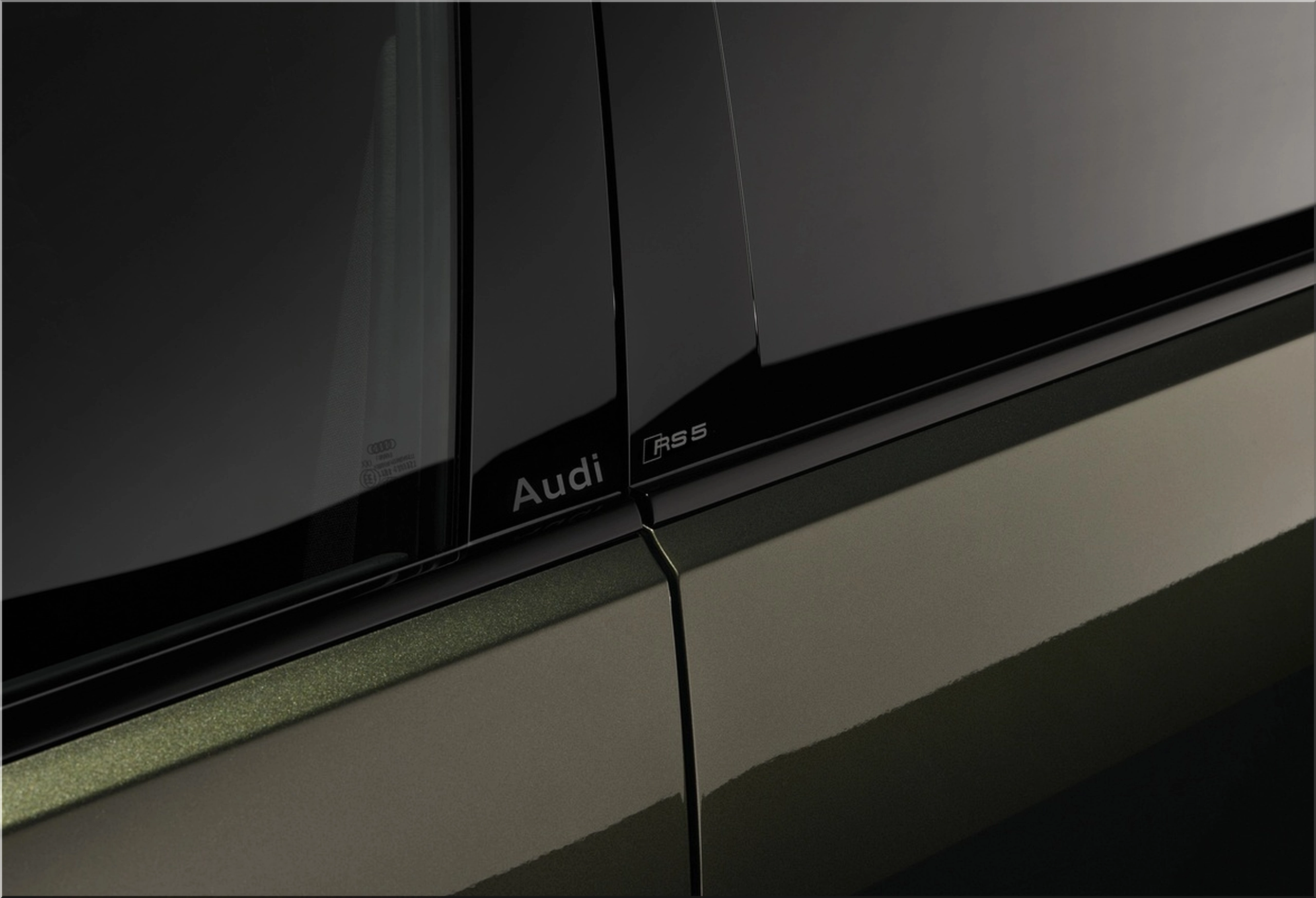
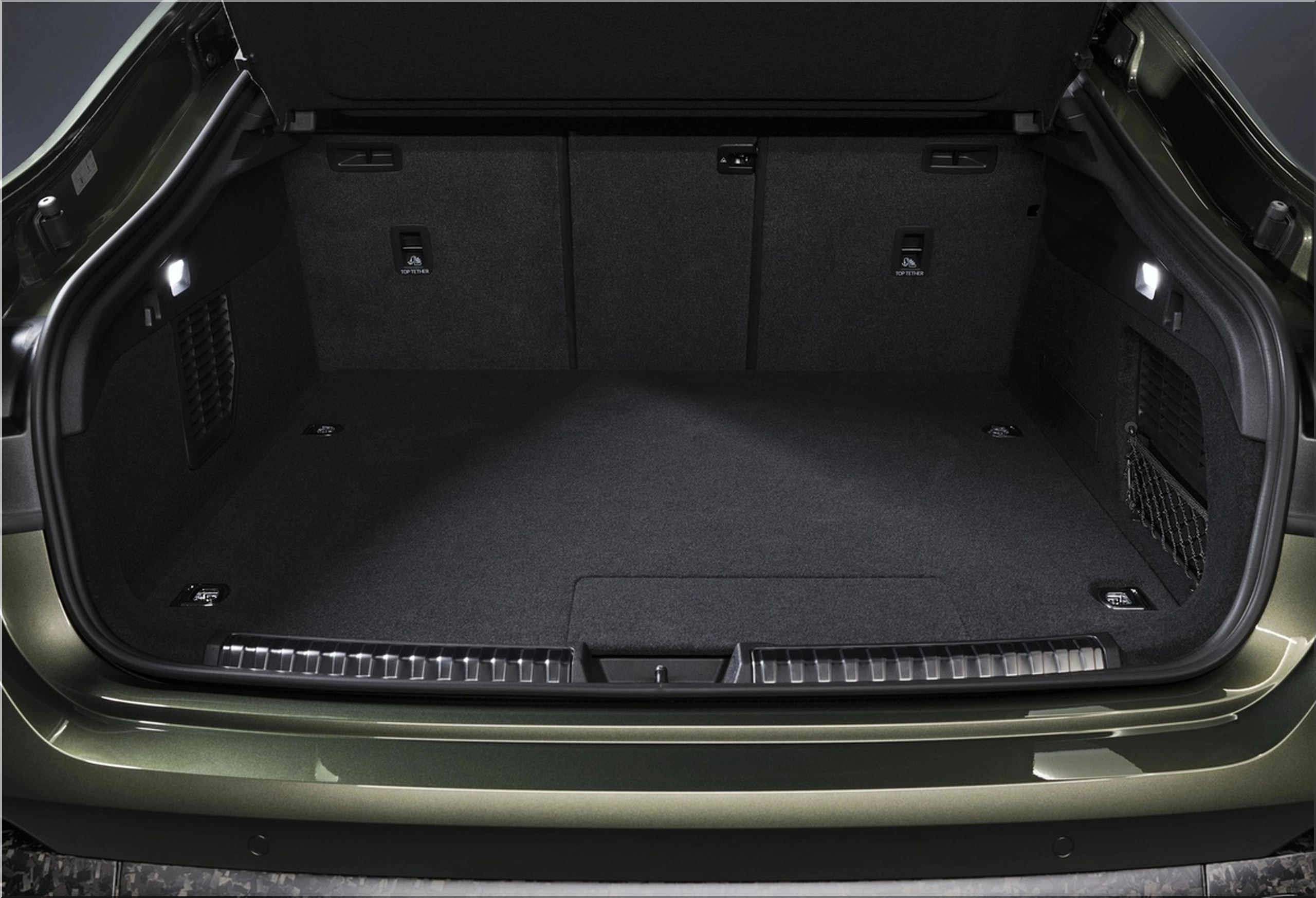
The new Audi RS 5 Sedan uses a coupe-like roofline and what Audi describes as a shallow rear window integrated into the trunk lid for easier loading. That gives the car a fastback-like functional advantage while retaining sedan branding in this generation.
Exterior details that matter
Audi says the RS 5 sits about 4 cm wider per side than the base A5 at both front and rear. That equals roughly 1.57 inches per side, or around 3.15 inches total width increase across each axle line.
Other RS-specific design features include:
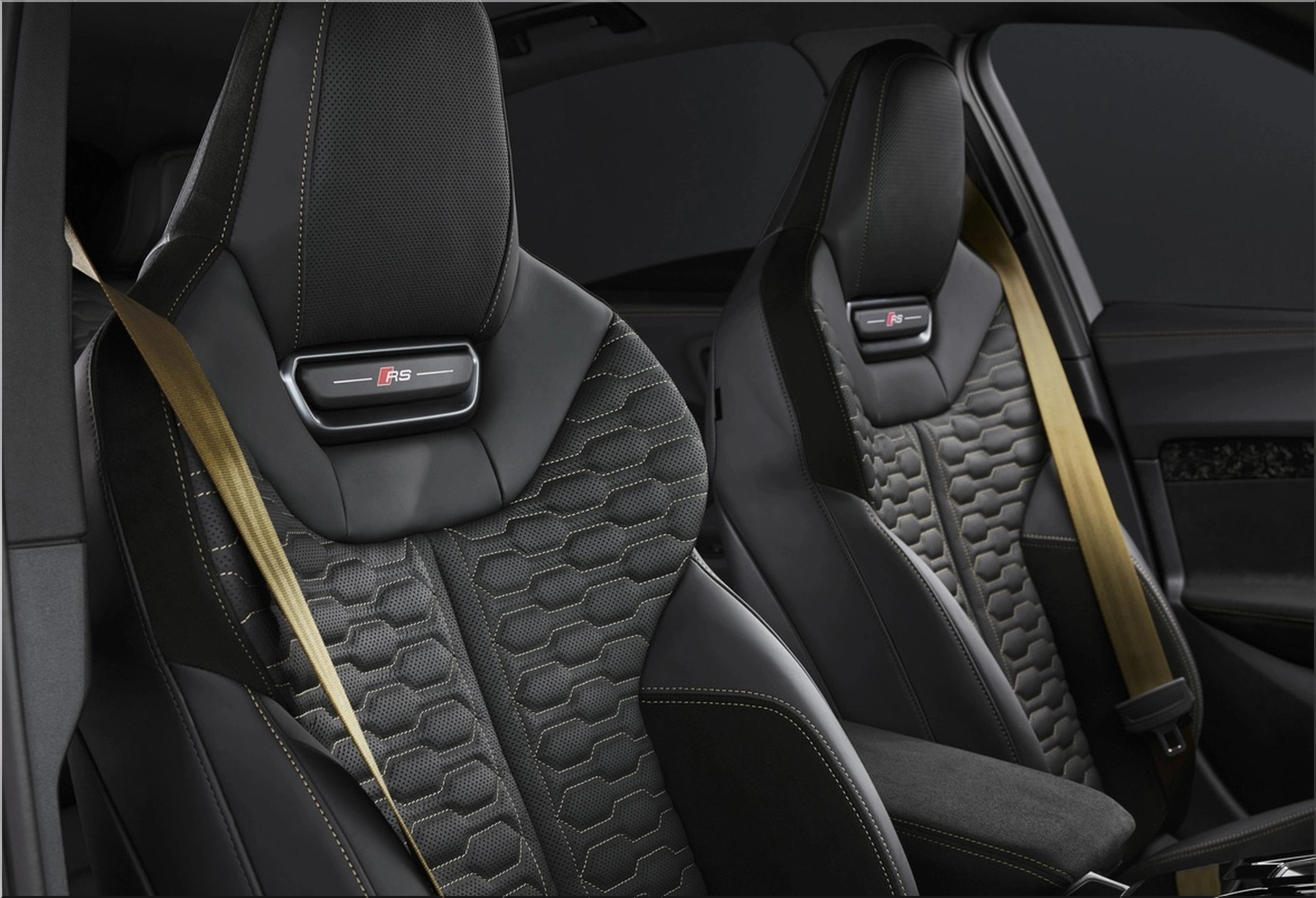
- RS honeycomb Singleframe grille
- Air Curtains and airflow-focused front detailing
- Pronounced fender forms with Ur-quattro visual references
- Large diffuser with vertical fins
- Matte oval exhaust outlets
- Darkened lighting elements (global spec)
- RS-specific digital light signatures (global spec)
U.S.-market lighting disclaimer
Audi USA states that some global lighting functions will not be available in the U.S. due to regulations. That includes features such as matrix LED functions and certain digital lighting signature/communication-light elements named in the global release.
If you write or publish spec content for U.S. buyers, keep that distinction clear.
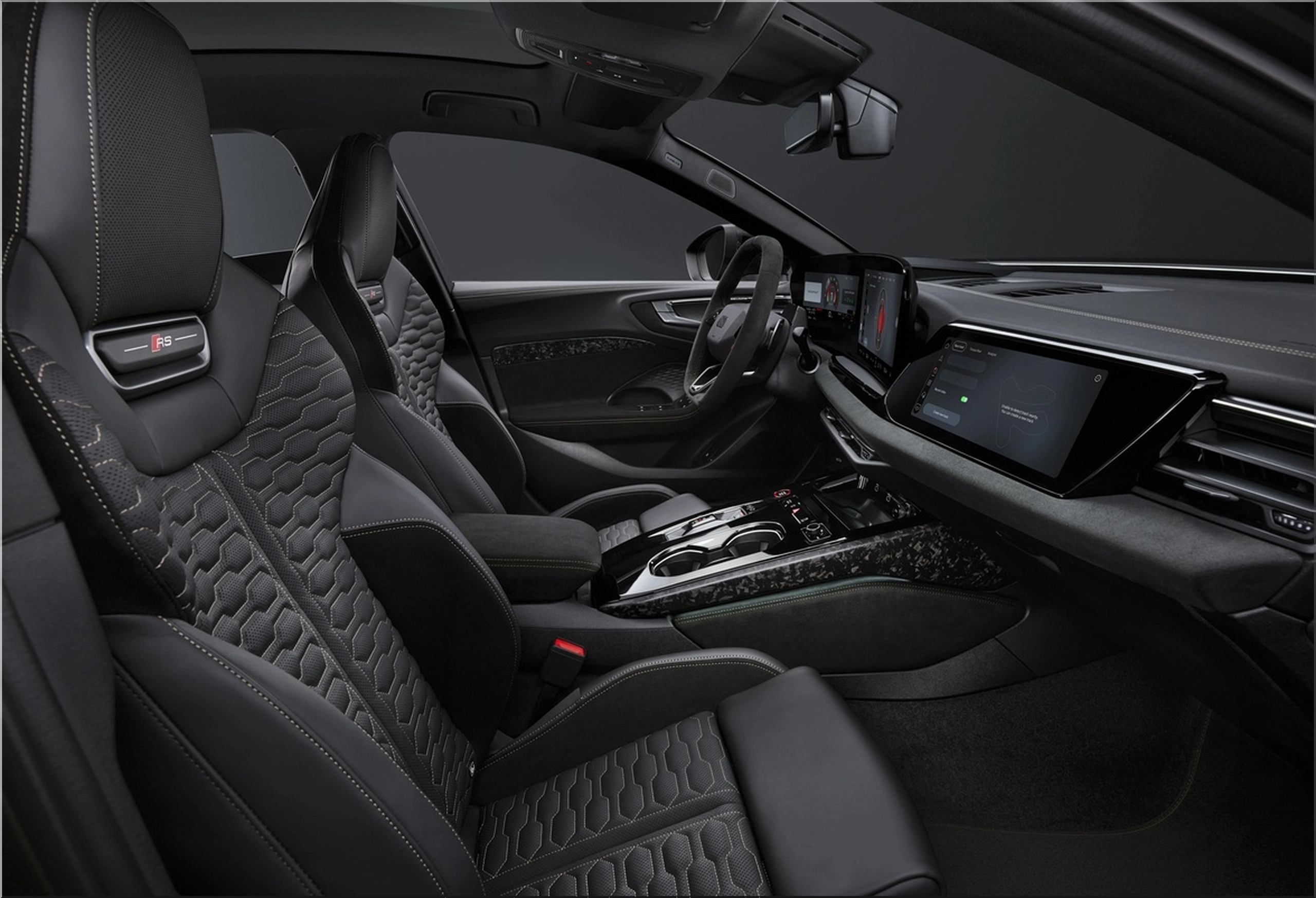
Interior and display stack
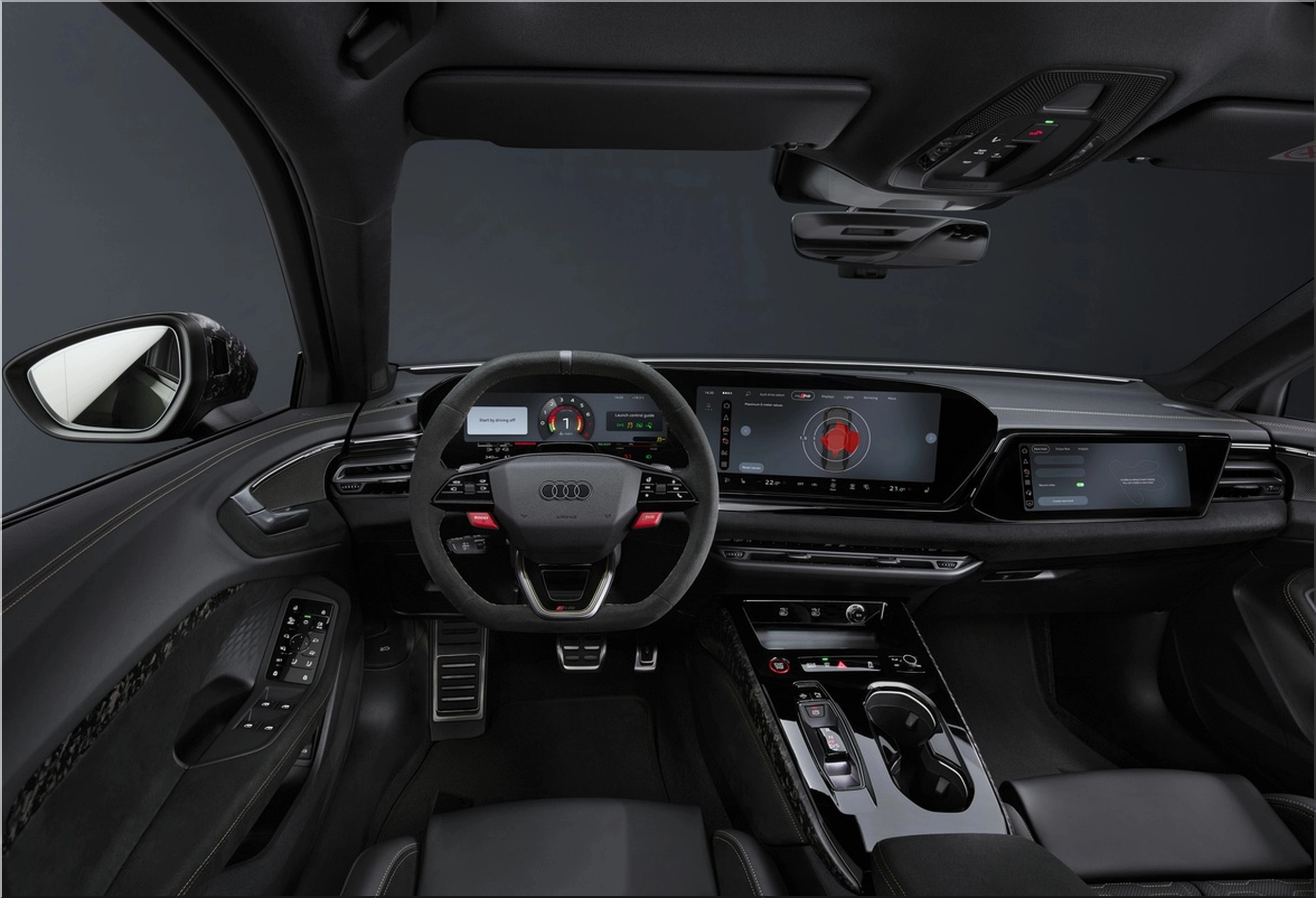
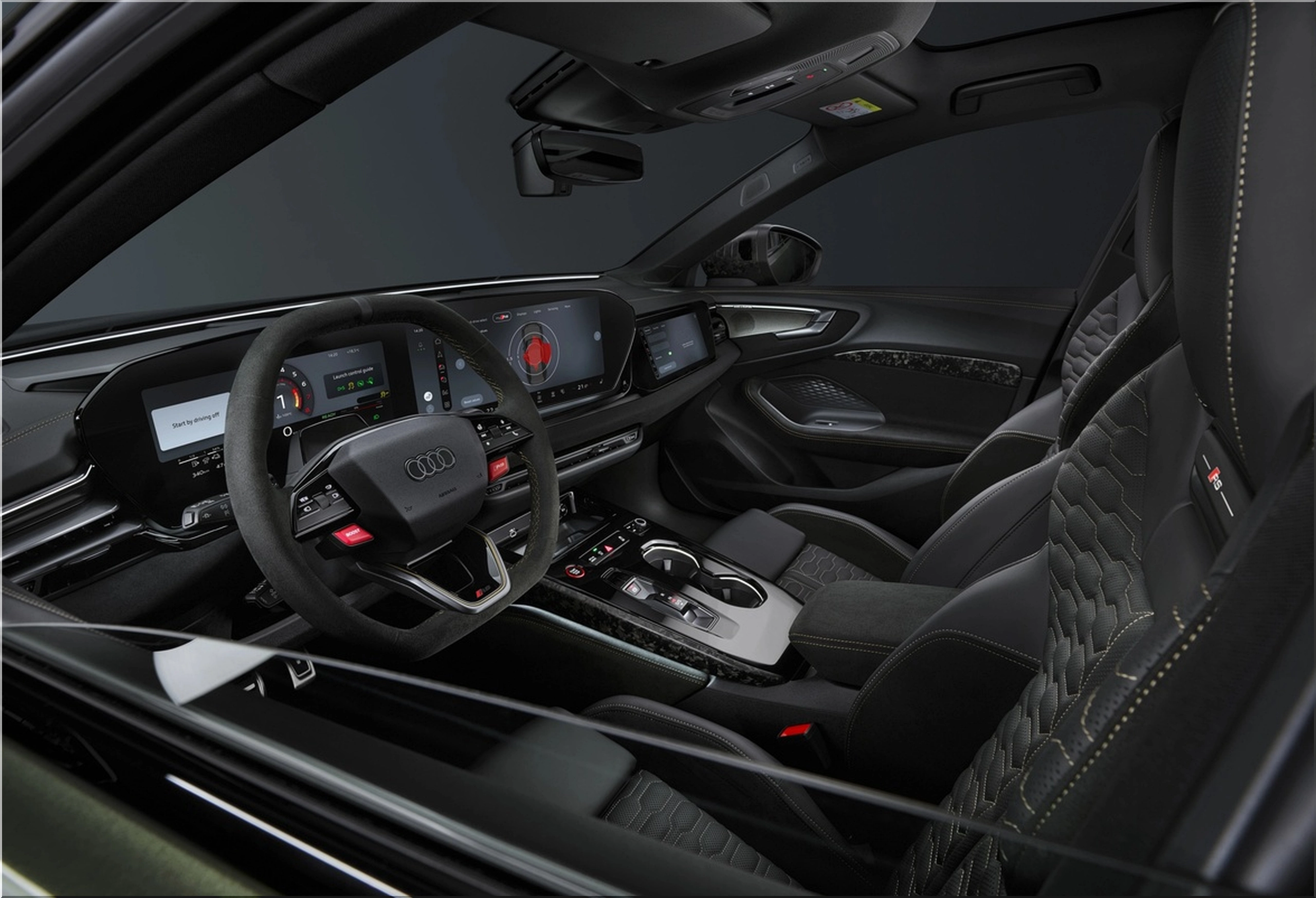
The cabin leans hard into data and performance telemetry:
- 11.9-inch virtual cockpit
- 14.5-inch MMI touch display
- 10.9-inch passenger display (standard in the global release)
- RS-specific telemetry for:
- lap times
- sector times
- G-forces
- tire temps/pressures
- drivetrain and battery data
- drift angle in RS torque rear mode
Audi also adds an Audi driving experience function that records pedal use, oversteer/understeer behavior, and lateral/longitudinal acceleration. That moves the RS 5 closer to a built-in coaching and logging platform than a traditional street-only performance sedan.
Driving Modes and Energy Strategy: How Audi Tuned the Car for Different Use Cases
Audi gives the RS 5 a broad mode spread. That part sounds routine until you read what each mode does to battery state-of-charge and torque behavior.
Key modes and what they do
- Comfort / Balanced
- Supports all-electric driving
- Neutral corner-exit behavior
- Daily commuting use case
- Dynamic
- Sharper steering and throttle response
- More rear bias at corner exit
- Lower yaw damping near the limit for a more active feel
- Battery held above 20% for performance reserve
- RS Sport
- Neutral handling with max propulsion focus
- Battery held around 90% for repeat electric support
- Built for fast laps and repeat acceleration
- RS Torque Rear
- Maximum rear bias
- Controlled drift-capable setup on closed courses
- Drift angle and lap analytics available
- Battery held around 90%
- RS Individual
- Driver-configurable steering, suspension, throttle response, sound, ESC, and torque-vectoring behavior
Boost function: 10 seconds on demand
Audi adds a steering-wheel boost button that delivers full performance for 10 seconds. The system selects the right gear and displays a countdown timer in the instrument cluster.
That feature sounds like a party trick. It actually solves a real passing problem in heavy hybrids: delayed power planning. Audi gives the driver a single action that calls the full system stack immediately.
Pricing, Market Position, and USD Conversion
Audi lists a German starting price for the RS 5 Sedan at 106,200 euros. Using a recent ECB euro reference rate near 1 EUR = 1.1767 USD, that converts to roughly $124,966, which rounds to about $125,000 before local taxes, destination, and market-specific equipment differences.
That number does not predict final U.S. MSRP. Audi has already stated U.S. specs and pricing will arrive later, and this model will differ from the global release in some features.
Quick price conversion table (reference only)
Price Conversion Table (Reference, Not U.S. MSRP)
| Item | Euro Price | EUR/USD Used | Approx. USD |
|---|---|---|---|
| Audi RS 5 Sedan (Germany launch price) | 106,200 EUR | 1.1767 | $124,966 |
| Audi RS 5 Avant (Germany launch price) | 107,850 EUR | 1.1767 | $126,908 |
Competitive Positioning: How the New RS 5 Sedan Stacks Up on Paper
Audi places the new RS 5 Sedan directly into the high-output compact/midsize performance sedan fight, where buyers compare power, drivetrain behavior, mass, and real-world repeatability more than brochure drama.
By comparison, the strongest direct rivals split into two camps: traditional ICE sport sedans and hybrid performance sedans.
Competitor Comparison Table (Key Published Figures)
| Model | Powertrain | Power | Torque | 0-60 mph / 0-62 mph | Drivetrain | Key Angle |
|---|---|---|---|---|---|---|
| 2027 Audi RS 5 Sedan (global figures) | 2.9L TT V6 PHEV | ~630 hp | ~608 lb-ft | 3.6 sec (0-62 mph) | AWD | New electromechanical rear torque vectoring + PHEV |
| BMW M3 Competition xDrive Sedan | 3.0L TT I6 gas | 523 hp | (varies by source/model page trim details) | BMW publishes 523 hp on M xDrive pages | AWD | Lower mass trend, conventional non-hybrid M formula |
| Mercedes-AMG C 63 S E PERFORMANCE Sedan | 2.0L turbo I4 PHEV + rear e-motor | 671 hp | 752 lb-ft | 3.3 sec (0-60 mph) | AWD | Higher output PHEV, more extreme torque headline |
| Cadillac CT4-V Blackwing | 3.6L TT V6 gas | 472 hp | 445 lb-ft | 3.9 sec (0-60 mph) | RWD (auto/manual variants) | Purist chassis/manual option and lower-complexity formula |
Win/loss metrics for the Audi RS 5 Sedan on paper
Where the RS 5 Sedan wins
- Strong hybrid output without dropping to a four-cylinder
- Deep drivetrain/chassis integration, not only power add-on
- Real EV commuting range for a performance sedan
- Advanced torque-vectoring control timing (200 Hz logic / 15 ms actuation)
- Rich built-in performance telemetry and drift analytics
Where the RS 5 Sedan may face pushback
- Curb weight: Audi lists the Sedan at 2,355 kg (about 5,192 lb)
- U.S. buyers must wait for final local specs and pricing
- Some headline lighting tech from global spec will not reach the U.S.
- Market segment buyers still care about emotional engine character and mass as much as output
From an expert perspective, Audi's move lands in a smart middle position. It keeps the V6 character that many buyers want, adds meaningful electric driving range, and builds a smarter AWD system that targets corner speed and control rather than only drag-strip bragging rights.
Pro-Tips for Buyers, Editors, and SEO Publishers Covering the RS 5 Sedan
Pro-Tip: Separate global specs from U.S. specs in your content
Do not present global launch data as final U.S. numbers. Audi USA explicitly says U.S.-specific specs, pricing, and EPA data will come later.
That protects your article from fast obsolescence and keeps buyer trust high.
Pro-Tip: Lead with drivetrain architecture, not only horsepower
Many readers will see "630 hp PHEV" and stop there. The better story sits in quattro with Dynamic Torque Control, battery charge-hold logic, and the new rear transaxle.
Those elements explain how the RS 5 drives, not only how it accelerates once.
Pro-Tip: Translate metric specs into buyer language
A line like "440 mm front ceramics" becomes more useful when you add "17.3-inch front carbon ceramics" and "about 66 lb lighter than steel setup." That improves clarity and search value at the same time.
What Now: Actionable Takeaways
If you are a buyer, editor, or dealer-side content team, use this checklist now.
- Track U.S. release updates
- Wait for Audi's U.S. announcement for EPA range, final power figures, pricing, and feature packaging.
- Prioritize drivetrain and chassis questions in reviews
- Ask how the car manages mass in transitions, how the rear transaxle behaves off throttle, and how repeatable the battery-supported performance feels after several hard laps.
- Compare by use case, not only peak output
- Daily commuter + weekend canyon run
- Track-day user who values repeatability
- Traditional sport sedan buyer who still wants a six-cylinder soundtrack
- Watch final wheel/tire and brake packaging for the U.S.
- This car's cornering personality will depend heavily on tire compound, wheel options, and brake calibration in local spec.
The new Audi RS 5 Sedan enters this class with serious hardware, a sharper technical story than many hybrid rivals, and a clear focus on corner-exit traction and control. Audi did not build a compliance hybrid. Audi built a software-rich, rear-active RS sedan that uses electrification as a performance tool.