

You feel your tyres long before you think about them. It is the thud through the seat over a speed breaker in Pune, the drone on the Mumbai to Nashik highway, the shudder across an expansion joint on a flyover. Choosing comfortable tyres for Indian roads is less about finding a magic product and more about getting a few decisions right: the type of tyre, the size, the sidewall and the pressure you run. Get those right and even a modest hatchback rides noticeably better.
Why Indian roads are hard on ride comfort?
A 10 km commute in most Indian cities throws everything at a tyre: patch jobs with raised edges, paver blocks, unmarked speed breakers and, after the monsoon, potholes that grow week by week.
Two kinds of discomfort come from this mix. The first is impact harshness: short, sharp hits at low speed that the tyre has to absorb before the suspension does. The second is noise and vibration at steady speed, which matters most on expressways and national highways where you might cruise at 90 to 100 km/h for hours. A good comfort tyre has to handle both.
What makes comfortable tyres for Indian roads?
Tyre type
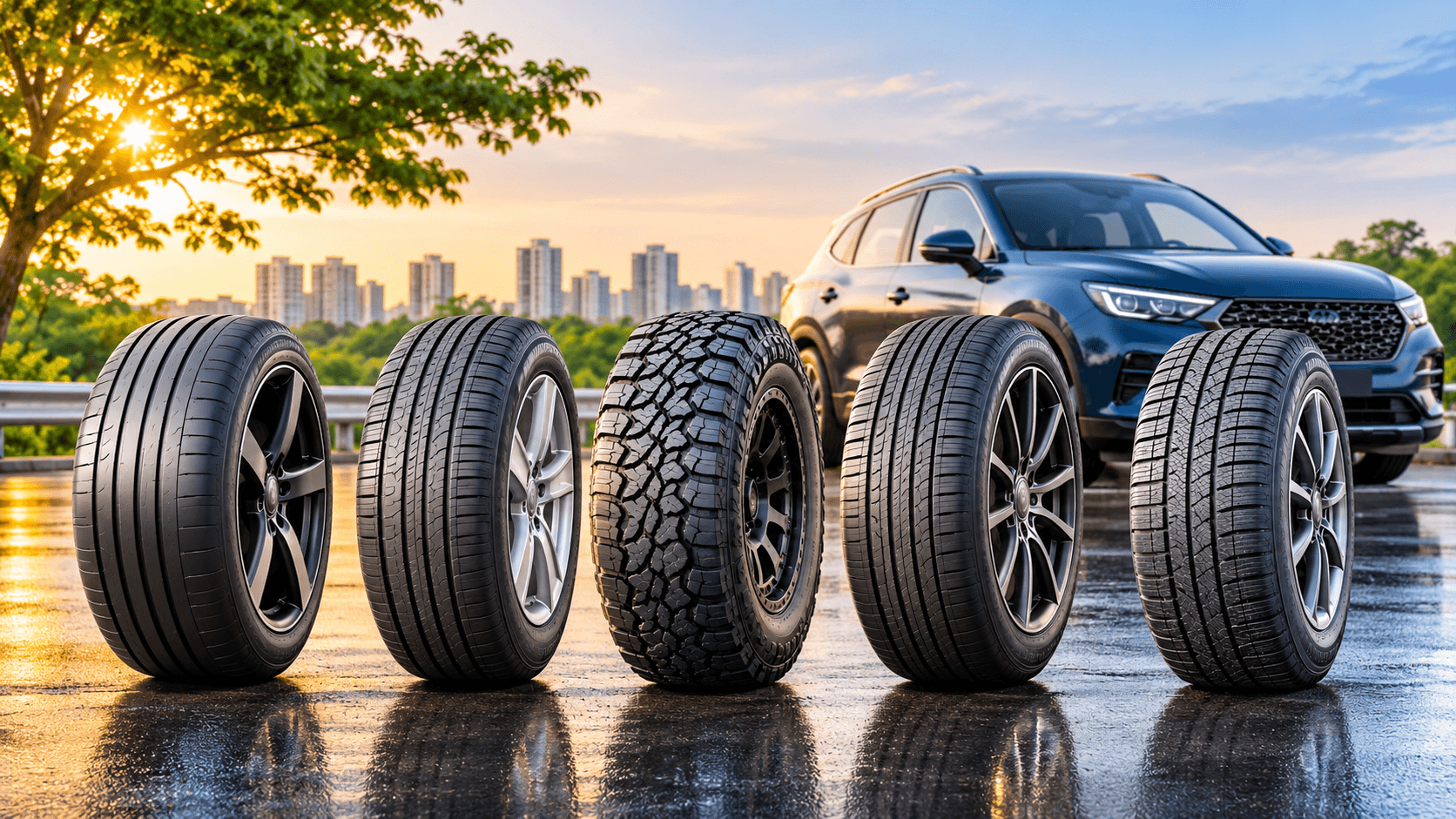
Touring tyres, sometimes sold as "comfort" tyres, are built for this job. Their tread pattern is tuned to break up road noise and the casing is designed to flex over bumps. Performance tyres grip harder in corners but usually use stiffer sidewalls. All-terrain tyres on SUVs carry chunky blocks that hum on tarmac and feel firmer over sharp edges.
Sidewall height
Look at a size such as 205/65 R16. The 65 is the aspect ratio: the sidewall is 65 percent as tall as the tread is wide. More sidewall means more rubber and air between the pothole edge and your wheel rim.
This is why upsizing from 16-inch to 18-inch alloys on a Creta or Seltos, with a lower-profile tyre to match, almost always makes the ride firmer. If your car came with two wheel options, the smaller wheel with the taller tyre usually rides more softly on broken city roads.
Load and speed markings
The service description, for example 96H, tells you the load each tyre can carry (96 means 710 kg) and its maximum speed (H means 210 km/h). Stick to the load index your car maker specifies. An XL or Reinforced tyre carries more load at a higher pressure, and that extra stiffness can make the ride slightly firmer. Fit XL where the placard asks for it; there is no comfort gain in choosing it otherwise.
If the numbers on your tyre still look like code, a detailed guide to reading a tyre sidewall will decode every marking in a few minutes.
| Tyre type | Ride over potholes and breakers | Cabin noise at highway speed | Best suited to |
|---|---|---|---|
| Touring / comfort | Soft, absorbs sharp edges well | Low | Daily city and highway use in hatchbacks, sedans, compact SUVs |
| Performance (low profile) | Firm, transmits more of each hit | Moderate | Enthusiast driving on good tarmac |
| Highway terrain (SUV) | Fairly soft | Low to moderate | Large SUVs that rarely leave tarmac |
| All-terrain (SUV) | Firm on tarmac, tough off it | Higher, with a noticeable hum | Rural roads, gravel, trails |
Some imported tyres carry the EU label, which rates rolling noise in decibels. Every tyre sold in India must carry the BIS ISI mark, and Indian standards also address rolling sound, so check the dealer's spec sheet for a noise figure.
The free comfort upgrade: pressure and upkeep
The most comfortable tyre in the shop will ride badly if it is pumped up wrong. Roadside air stations often fill to a round number rather than the placard figure, and a tyre at 40 PSI instead of 33 rides like a football.
Use the pressure printed on the sticker inside the driver's door jamb, and check it cold, before you have driven more than a couple of kilometres. Typical cars run 30 to 35 PSI, SUVs 32 to 38 PSI, with higher figures listed for a full load. Check monthly and before long trips.
A few other habits keep the ride smooth:
- Balance the wheels whenever a tyre is fitted or repaired. Most steering-wheel shake at 80 to 100 km/h comes from imbalance, not the tyre design.
- Get an alignment check every 5,000 km or after a hard pothole hit. Uneven tread wear gets noisy.
- Rotate the tyres every 5,000 to 10,000 km so all four wear at the same rate.
- Replace ageing tyres. Rubber hardens with time. Read the four-digit date code on the sidewall (2325 means the 23rd week of 2025), have tyres over five years old inspected every year, and plan to replace them by about six to ten years even if tread remains.
Checklist for buying comfortable tyres for Indian roads
Take this to the tyre shop:
- Ask for a touring or comfort pattern in the exact size on your door placard.
- Keep the original aspect ratio; do not drop to a lower profile for looks.
- Match or exceed the load index and speed rating your car maker lists.
- Choose XL only if the placard or manual specifies it.
- Check the date code on the tyres you are handed.
- Look for the ISI mark, and the EU label or noise rating where one is shown.
- Insist on wheel balancing at fitting and an alignment check on the same visit.
- Confirm the fitted pressure against the placard before you drive off.
Making the decision at the tyre shop
Start with your roads, not the brochure. If your week is mostly city traffic, breakers and patched tarmac, a touring tyre on the standard wheel will give you the softest, quietest ride your car can offer. If you regularly take a loaded SUV onto rough village roads, accept a little extra firmness in exchange for a tougher tread.
Once you know the right tyre category and size for your car, comparing dedicated touring ranges across the best tyre brands in India will help you find a model engineered for local road conditions and backed by reliable warranty support.
Then drive the new set for a week at the right pressure before you judge it. Comfortable tyres for Indian roads rarely feel dramatic on day one. You notice them a month later, when the Monday commute leaves your back in better shape than it used to.