
For many first-time franchisees in the Philippines, the brand decision feels like the big one, yet the choice of where the cart or counter will actually stand often shapes the first year far more than the logo on the signage. Two common options sit at opposite ends of the small-format world, the mall kiosk with its steady air-conditioned crowd and the street-front stall that lives or dies on the foot traffic of a busy corner.
What the Mall Kiosk Really Offers
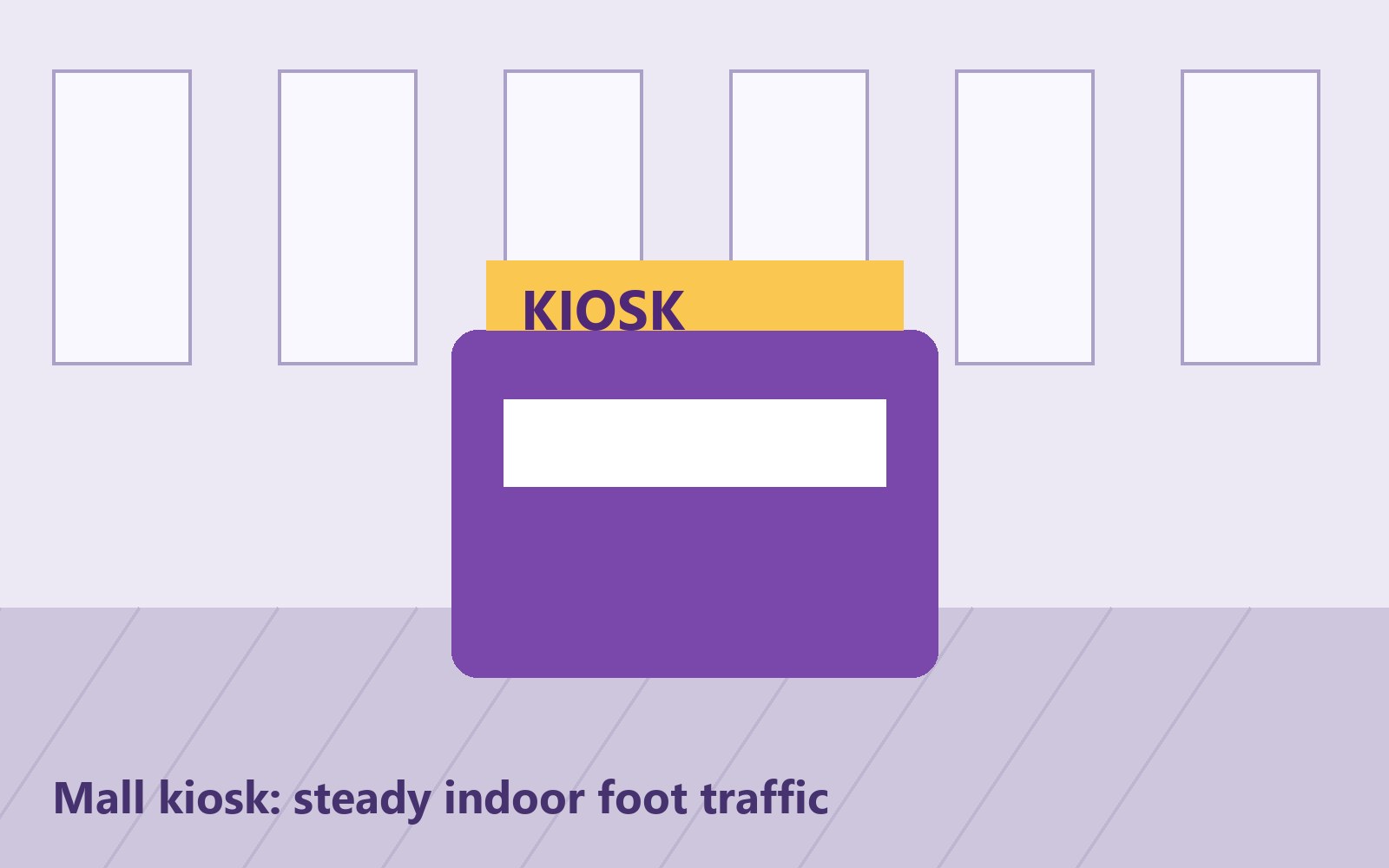
A kiosk inside a mall comes with a built-in audience, predictable opening hours and a level of security that a sidewalk spot rarely matches. Shoppers arrive already in a spending mood, and families drifting between the cinema and the supermarket are exactly the people who stop for a drink, a snack or a quick accessory. The mall also handles cleaning, lighting and most of the work of drawing people in, which leaves the franchisee free to focus on staff and stock.
The trade-off is rigidity, because malls set strict rules on fit-out design, operating hours, signage and even the music played at the counter. The lease usually carries a monthly rent plus common area dues or a share of sales that keeps running whether the day is busy or slow, and terms tend to run a year or more. Space in the better malls is often reserved for brands with a track record, so a newcomer may be offered a corner near the parking ramp rather than the food court entrance.
Why the Street-Front Stall Still Wins in Many Towns
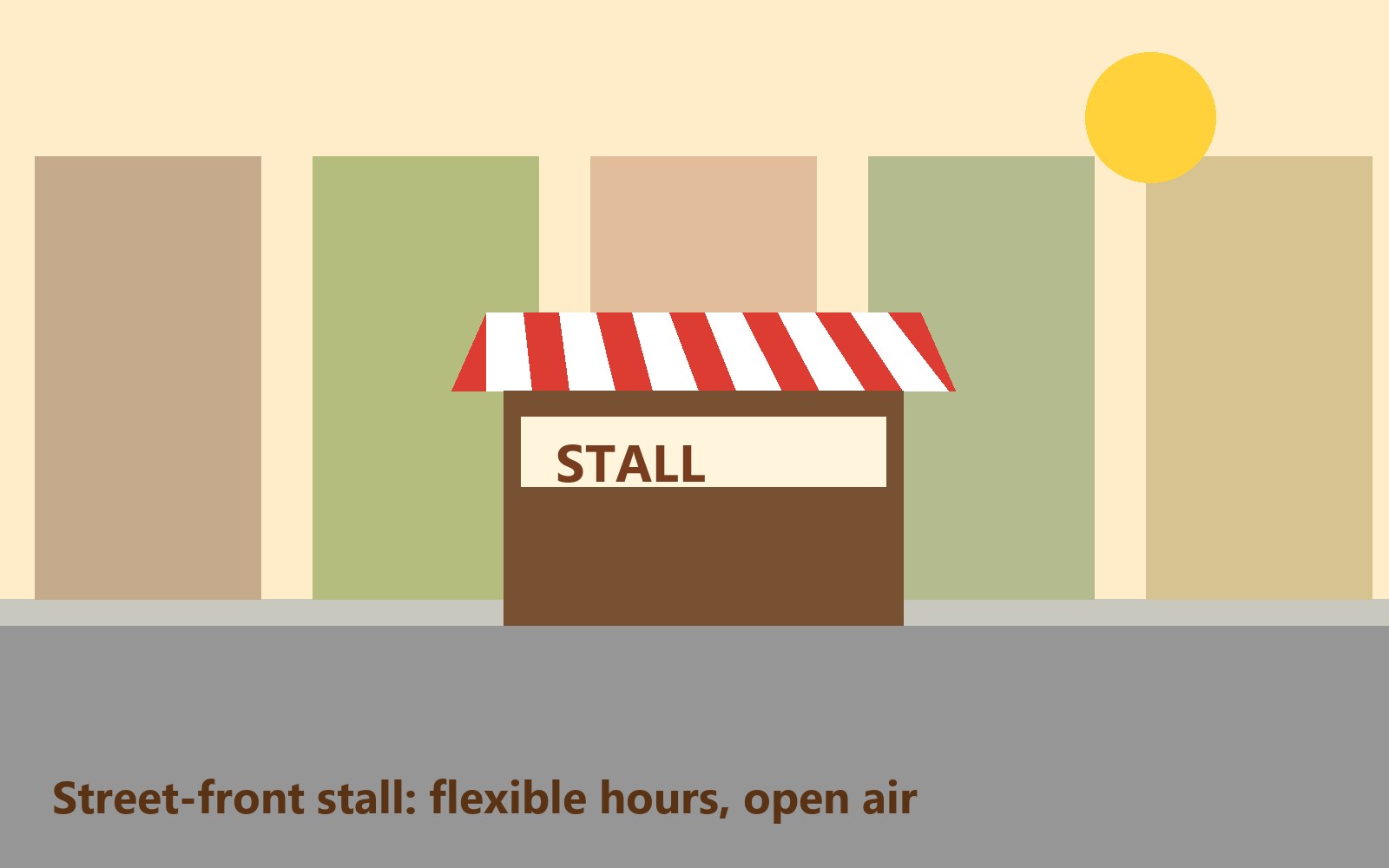
A stall on a street frontage, near a school gate, a jeepney terminal or a public market, can be far cheaper to secure and much easier to adjust. Owners can open early for commuters, stay late for the night crowd and change their hours as soon as the neighborhood pattern becomes clear. In provincial towns where the nearest mall is a long tricycle ride away, the street is simply where daily life happens, and a well-placed cart can see more customers than a quiet kiosk in a half-empty arcade.
The weaknesses are just as real, since rain, heat and flooding hit sales directly and permits from the barangay and city hall need to be secured and renewed every year. The space itself may depend on an informal agreement with a property owner who can change their mind, and keeping equipment safe overnight becomes the franchisee's problem rather than the mall's. A road repair or a new competitor two doors away can shift traffic within a single week.
Matching the Format to the Product
The product often decides the question before the rent does. Items that people buy on impulse while walking, such as shakes, fries, siomai or grilled snacks, tend to suit both settings, while products that need a cool room or careful display, like specialty desserts or small gadget accessories, usually perform better under a mall roof. Readers weighing these trade-offs can look through food cart and kiosk franchise concepts grouped by format to see which brands are built for compact counters and which expect a fuller store.
It also helps to ask the franchisor directly which location types its existing outlets use, because many brands already hold a clear preference based on years of sales records. Some will only approve mall placements, while others actively encourage street units near schools and transport stops where their customers already gather.
Running the Numbers Side by Side
A fair comparison looks beyond the franchise package itself. The total cost of a mall kiosk includes the security deposit, advance rent, fit-out to mall standards and the ongoing dues, while a street stall adds permits, a canopy or roofing, electrical work and possibly a storage arrangement for the night. Projected daily sales should be estimated conservatively for each spot by actually counting passers-by at different hours, because a location that looks busy on a Saturday afternoon can be nearly empty on a Tuesday morning.
Directories such as FranchiseNegosyo, found at franchisenegosyo.com, make this groundwork easier by showing each brand's franchise fee, total investment range, royalty and payback period in the same order, so a would-be owner can compare Philippine franchise brands side by side before deciding whether a given concept fits a mall budget or a street budget.
A Practical Way to Decide
Many first-time owners, including OFWs planning a business back home, find that the safest path is to start where the product naturally belongs and where the lease commitment matches their cash reserve. Someone with limited savings and strong local knowledge of a busy corner may do better with a street stall that can be adjusted month by month, while someone who values predictable hours and less hands-on supervision may prefer the structure of a mall, even at a higher fixed cost.
Whatever the choice, spending a few days observing the site, talking to nearby vendors and confirming the franchisor's approval for that exact spot tends to prevent the most expensive mistakes. The right location is rarely the most glamorous one, but rather the one where the target customer already walks by every day with a good reason to stop.