
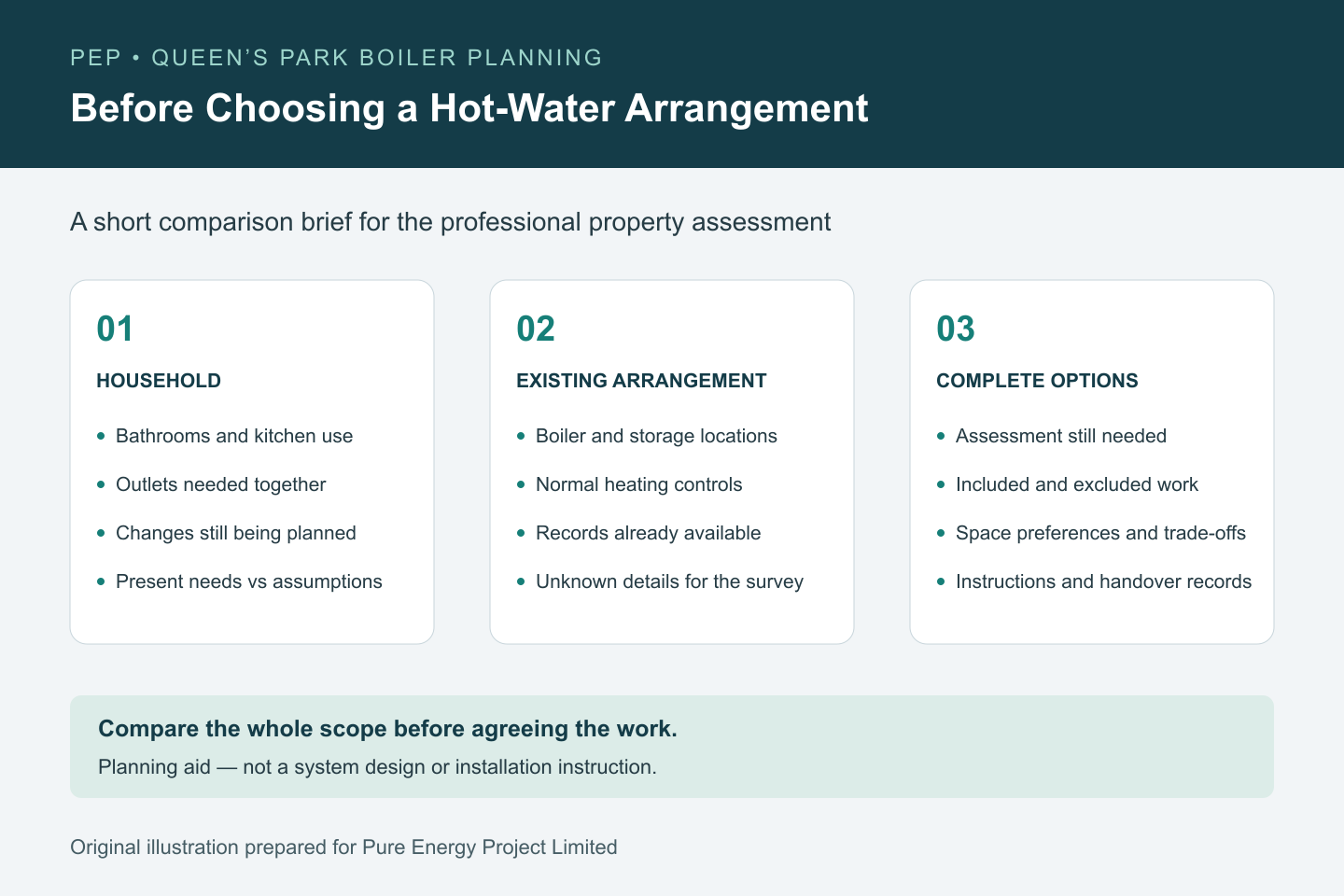
A proposed boiler replacement often brings a second question: should the home keep its present hot-water arrangement or change it? The answer should follow a property assessment and a discussion of household requirements. It should not begin with an assumption that every cylinder is wasted space or that every household needs the same type of boiler. A clear comparison brief helps an engineer explain the options.
Record the household requirement first
Describe how the bathrooms and kitchen are normally used. Note occasions when more than one outlet is needed, changes in occupancy and any additional bathroom still being planned. Distinguish present needs from future possibilities. An uncertain extension should be identified as an assumption for discussion, rather than quietly treated as an agreed design requirement.
Identify the existing arrangement without dismantling it
Gather the records you already hold and take ordinary external photographs if requested. Note the locations of the boiler, any hot-water storage and the normal controls. Leave inaccessible or concealed details unknown. Do not open equipment or alter safety devices to complete the brief. The contractor can establish what further inspection is required and explain any limits to the initial assessment.
Compare complete options
Ask each proposed option to explain the associated work, the space it uses, the equipment it retains and the assumptions behind it. A proposal that changes the hot-water arrangement may involve work beyond replacing one appliance. Check what is said about controls, retained pipework, access, electrical interfaces, waste removal and making good. Comparing only boiler model names can conceal different project boundaries.
Put space preferences in context
Recovering storage space can matter to a household, but it is one preference among several. List the practical result you want, such as freeing a cupboard or reducing clutter around the controls. Ask how each assessed option would meet that preference and what compromises follow. Do not remove existing equipment before the replacement arrangement has been properly assessed and agreed.
Keep the comparison honest
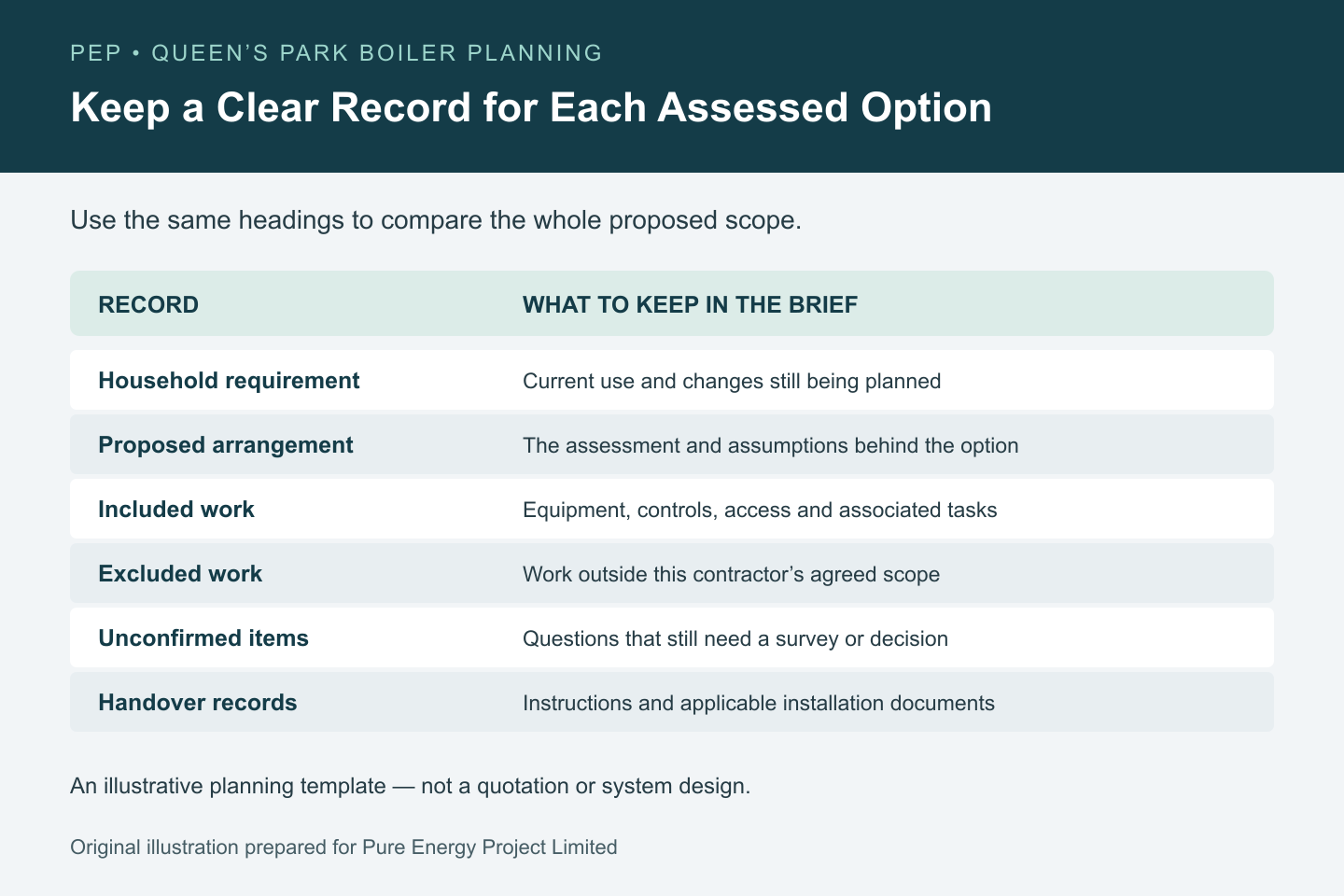
Use a short written record for each option: household requirement, proposed arrangement, assessment still needed, included work, excluded work and documents expected at handover. Where a quotation includes an allowance, ask what information would turn it into a confirmed scope. Where a contractor rules out an option, request the property-specific reason in language you can understand. A recommendation is more useful when its assumptions are visible.
Plan for normal use after installation
Ask how the household will control heating and hot water in everyday use, what demonstration is included and where the relevant instructions will be kept. Establish the route for reporting a question after handover. Product warranty registration, installation records and routine user instructions are different items; request the applicable documents rather than relying on a single warranty headline.
For a Queen's Park home, the sensible choice is the arrangement that the professional assessment supports and the household understands. The postcode provides local context; it does not establish water performance, concealed pipe condition or equipment suitability. Keep those questions open until they have been assessed, then retain the agreed option and its scope in the project record.
About This Guide
Prepared for Pure Energy Project Limited. For local service information, see PEP's boiler installation service in Queen's Park. For independent safety information, read the HSE guidance on checking a gas engineer.