
Go-to-market engineering is described in two incompatible ways at once. In one version it is a job title you hire for. In the other it is a practice that connects the pieces of a revenue system so they behave like one thing. The second version is the useful one, and the difference shows up in what a team actually builds.
Why outbound results disappoint
Most teams that are unhappy with outbound do not have an outbound problem. They have a readiness problem that sits upstream of the sequence. The sequence is the last link in a chain, and it is the only part that is visible when results are bad, so it gets rewritten first. New subject lines on an unready list change very little.
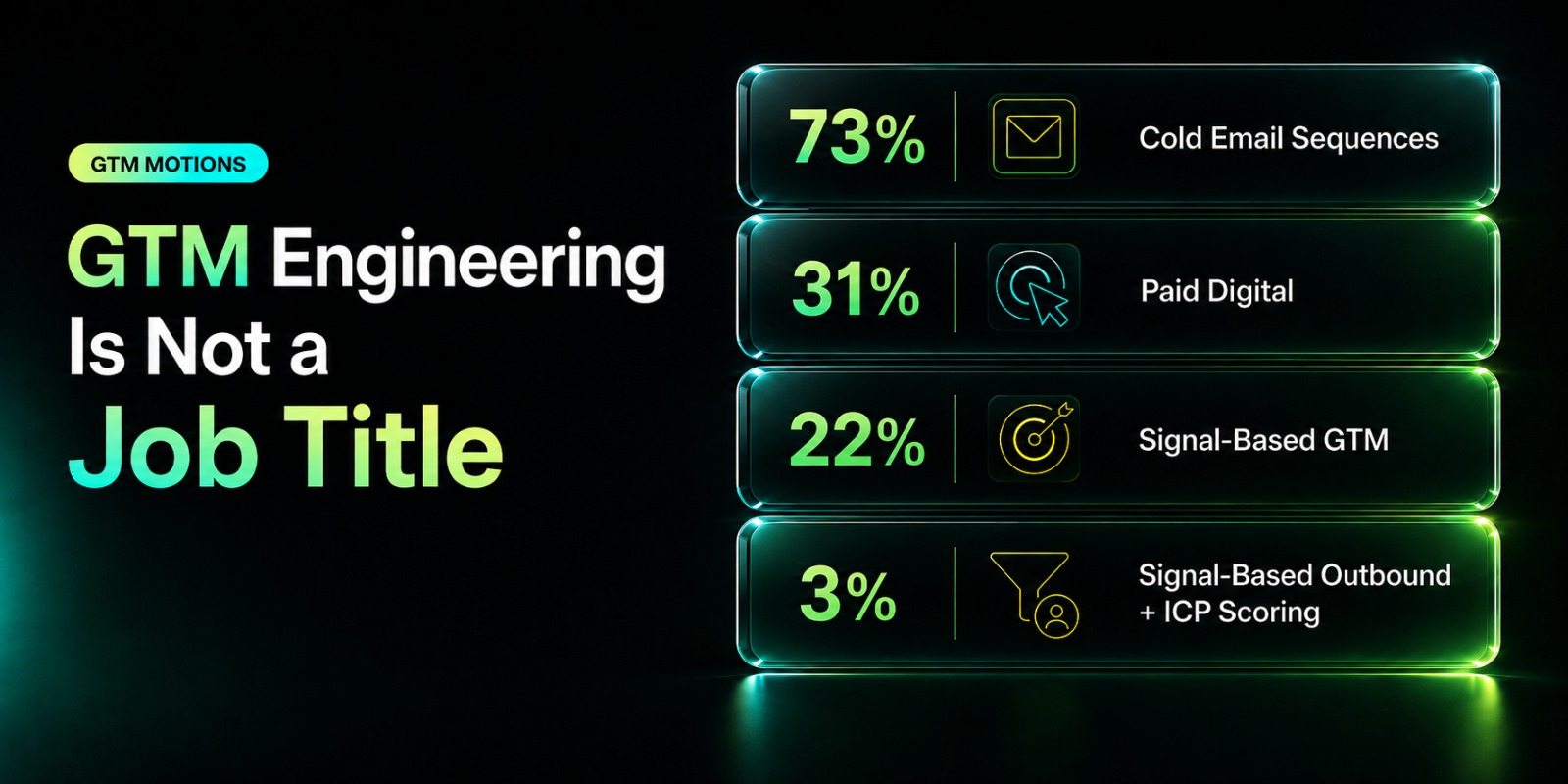
In conversations with early-stage B2B SaaS teams, 73% were running cold email sequences and 22% were doing some form of signal-based go-to-market. Only 3% combined signal-based outbound with proper ideal customer profile scoring before sending. These are conversations, not a formal market survey, so the numbers describe the teams we spoke to rather than the whole market. The gap they point to is still worth noticing: activity is not missing, but the systems under the activity are less mature than the activity on top.
Capturing a signal is not knowing an account is ready
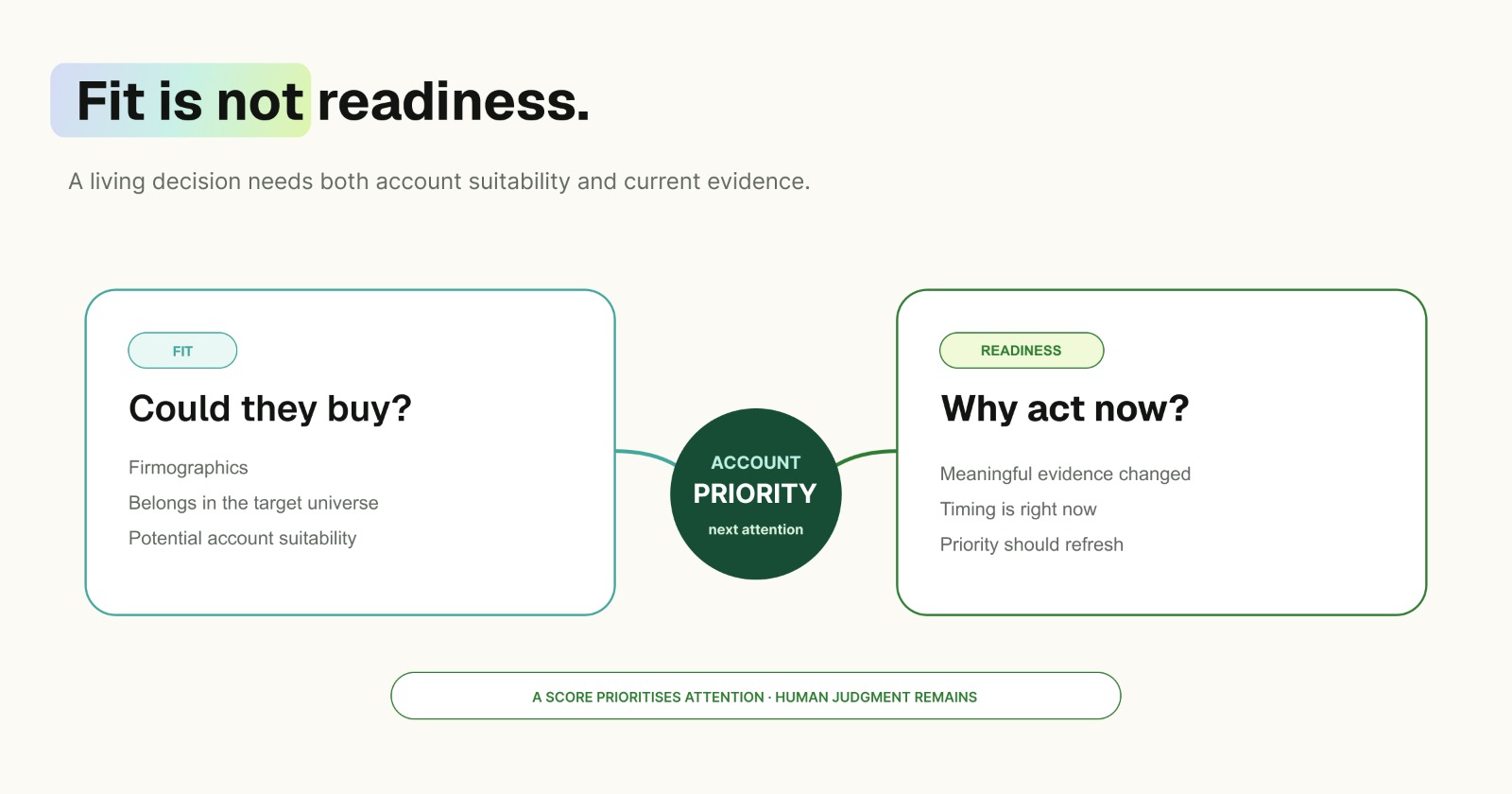
A team can capture a signal and still send before it has checked whether the account is ready. Fit and readiness are two separate questions. Fit asks whether a company looks like the customers you serve well. Readiness asks whether something has changed that makes this the right moment to talk. A hiring push, a funding round, a new tool in the stack or a leadership change can each be a signal, but a signal only matters once it is tied to a scored account and a decision about what happens next.
What the practice looks like in a working system
The practice is easy to describe. Each step is a small system with inputs, outputs and a failure mode, which is why engineering is the right word for the work.
- Signals are captured from the places where buyers reveal their state.
- Accounts are scored for fit and for readiness, separately.
- A trigger decides when an account moves from being watched to being contacted.
- Messaging and positioning decide what is said when that happens.
AI is useful in this chain for the repetitive work: enrichment, research summaries and first-pass scoring. Humans keep the judgment over timing and priority, because those decisions depend on context a model does not have.
Why the job-title reading misses the point
You can hire someone with the title and buy the right software and still end up with the same disconnected parts, because the work is integration rather than tooling. The question worth asking is not who owns the title. It is whether signal capture, scoring, triggering and messaging are connected to each other at all. If a rep has to copy data between four tabs before sending one message, the system is not engineered yet, whatever the org chart says.
A practical way to start
Pick one motion you already run, for example cold email to a defined segment, and trace it backwards. Where does the list come from? What tells you an account is ready? What triggers the first message? Write down each handoff and mark the ones that depend on a person remembering to do something. Those are the first places to connect. Fix one link at a time and measure the effect before moving on, rather than rebuilding everything at once.
The full write-up, with the survey breakdown and the readiness-based approach, is in GTM Engineering Is Not a Job Title. For more on how we work with B2B teams, see OneGTMLab.