
Decide who needs the explanation
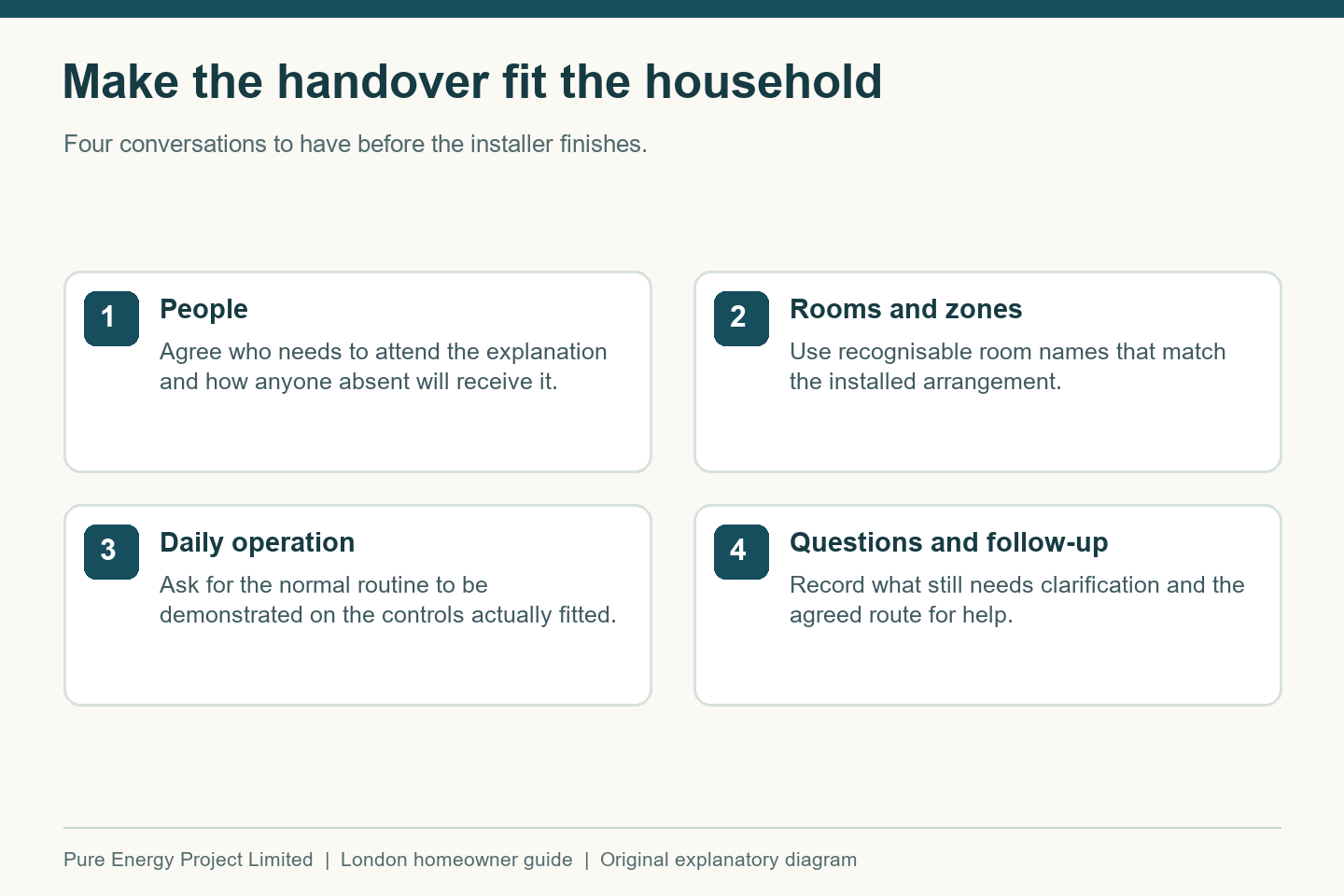
A heating handover is more useful when it is planned around the people who will actually operate the system. The person organising the refurbishment may not be the person who changes the daily programme or answers a later question about a room. Before the installation finishes, identify who should attend the demonstration and ask what information they need. If someone cannot be there, agree how they will receive an explanation rather than assuming that another member of the household will remember every detail.
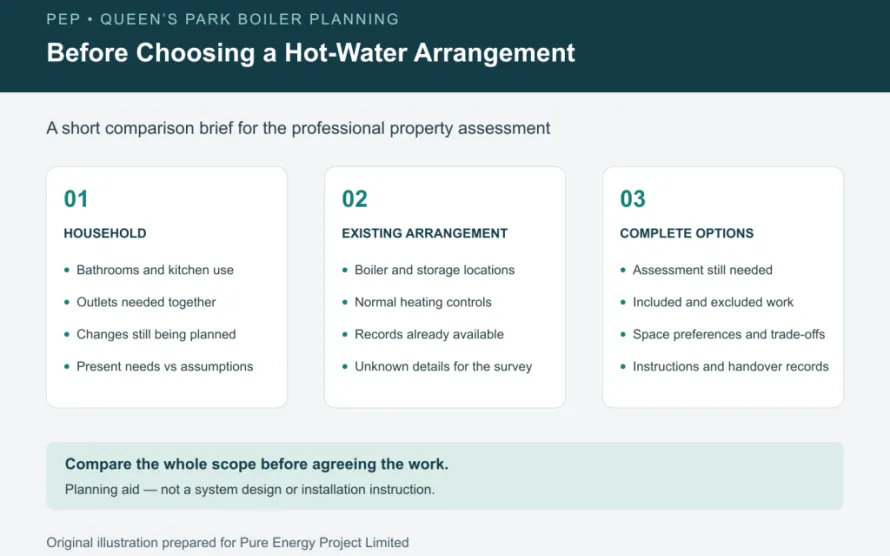
Describe the household's ordinary routine in plain language. Include working from home, rooms used at different times and any part of the home that is occupied only occasionally. These details help frame useful questions for the installer. They do not replace the design assessment or justify a particular equipment choice on their own. The aim is to connect the controls being handed over with the way the home is actually used, rather than accepting a demonstration that nobody can relate to an ordinary weekday.
Separate everyday operation from technical work
When arranging a boiler installation or replacement in London, ask what the handover will cover and which records will be supplied for the work completed. A practical demonstration can show the household the normal operating controls, where to find the relevant instructions and who to contact with questions. It should also make clear which matters belong to a competent installer. Understanding daily operation does not mean the homeowner needs to carry out unfamiliar technical adjustments.
Prepare a short list of questions before the demonstration. Useful examples include how to recognise the current programme, how to make an ordinary temporary change using the supplied controls and how to return to the agreed routine. Ask the installer to explain these actions on the equipment actually fitted. A manufacturer's general video may be helpful afterwards, but it does not by itself explain how several products have been configured to work together in this particular home.
Give the rooms and zones recognisable names
For underfloor heating installation in London, ask for the room and zone descriptions used in the design to match the handover information. A controller called Zone 3 is less helpful if the household cannot identify the rooms it serves. Ask the installer to explain the arrangement in ordinary room names and keep the resulting schedule with the instructions. If the home also retains radiators, include their relationship to the controls in the explanation.
Share any final room-name changes before the labels and records are completed. A space described as Study on an early drawing may become a guest bedroom during the project. Consistent naming helps the homeowner ask a clear question later and helps a future engineer understand which area is being discussed. The schedule should describe the installed arrangement, including any changes agreed during the work, rather than simply reproducing an early proposal that has since been revised.
Keep the records together and make them usable
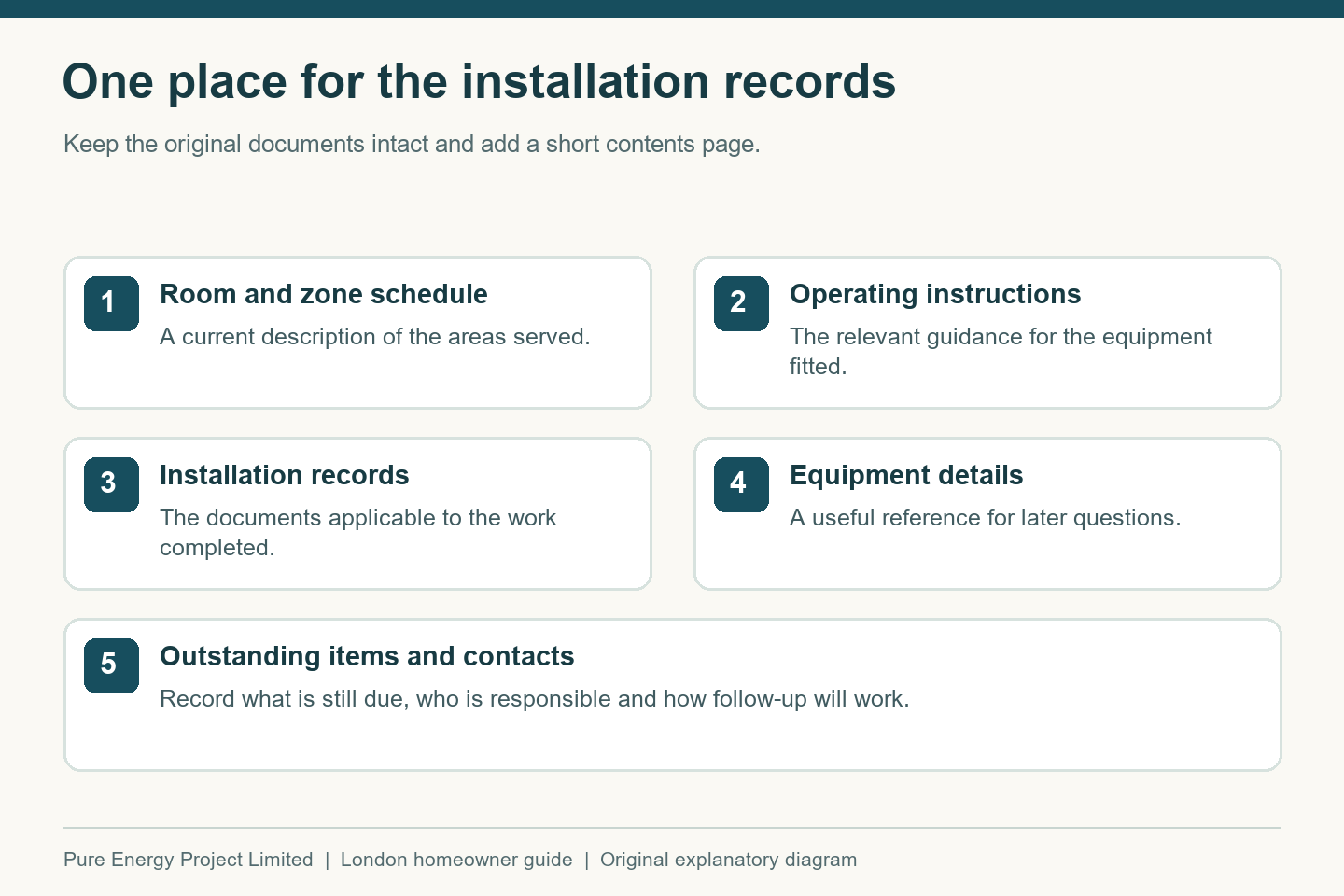
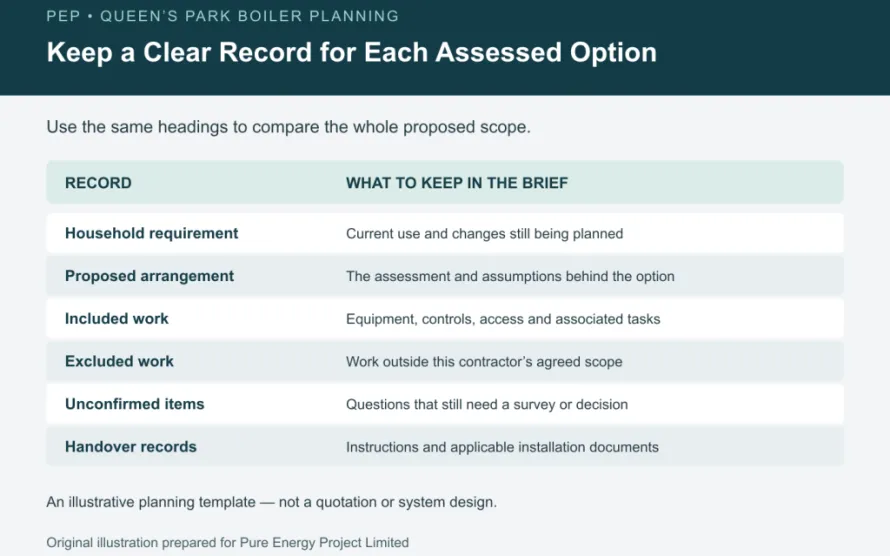
Ask which installation, commissioning and product records apply to the actual scope. Keep those documents together with the current operating instructions, equipment details and the agreed contact route. A folder organised by the system actually installed is easier to use than a collection of unrelated downloads. Where several trades contribute, clarify which person provides each record and how an outstanding item will be followed up. Avoid describing the handover pack as complete until the expected items have been checked.
Use a brief contents page if the project produces several documents. Identify what each item describes and where the current version is stored. Keep the original records intact; the contents page is an aid to finding them, rather than a replacement for the formal documents. A simple written note of the demonstrated routine can also help the household recall what was explained, provided it agrees with the installer's guidance and the instructions for the equipment fitted.
Finish with a demonstration and a route for questions
During the handover, ask the people who will operate the system to follow the demonstration and raise anything they do not understand. Allow time for the explanation to connect the room schedule, the controls and the documents. If the homeowner is attending remotely or another person is present on their behalf, agree how remaining questions will be answered. The useful outcome is an understood operating routine and an accurate record of what still needs clarification.
Finally, confirm how to report a concern after the household has used the system. Describe observations clearly, including the room, the time and what the controls displayed, without attempting unfamiliar technical changes to investigate. Keep any agreed follow-up with the installation record. A good handover does not depend on the owner memorising the internal details of the heating system. It gives the household a workable daily routine, clear information and a sensible way to obtain help when it is needed.
Prepared by Pure Energy Project Limited for London homeowners. General project-planning information; installation suitability, commissioning and technical work require the appropriate competent professionals.